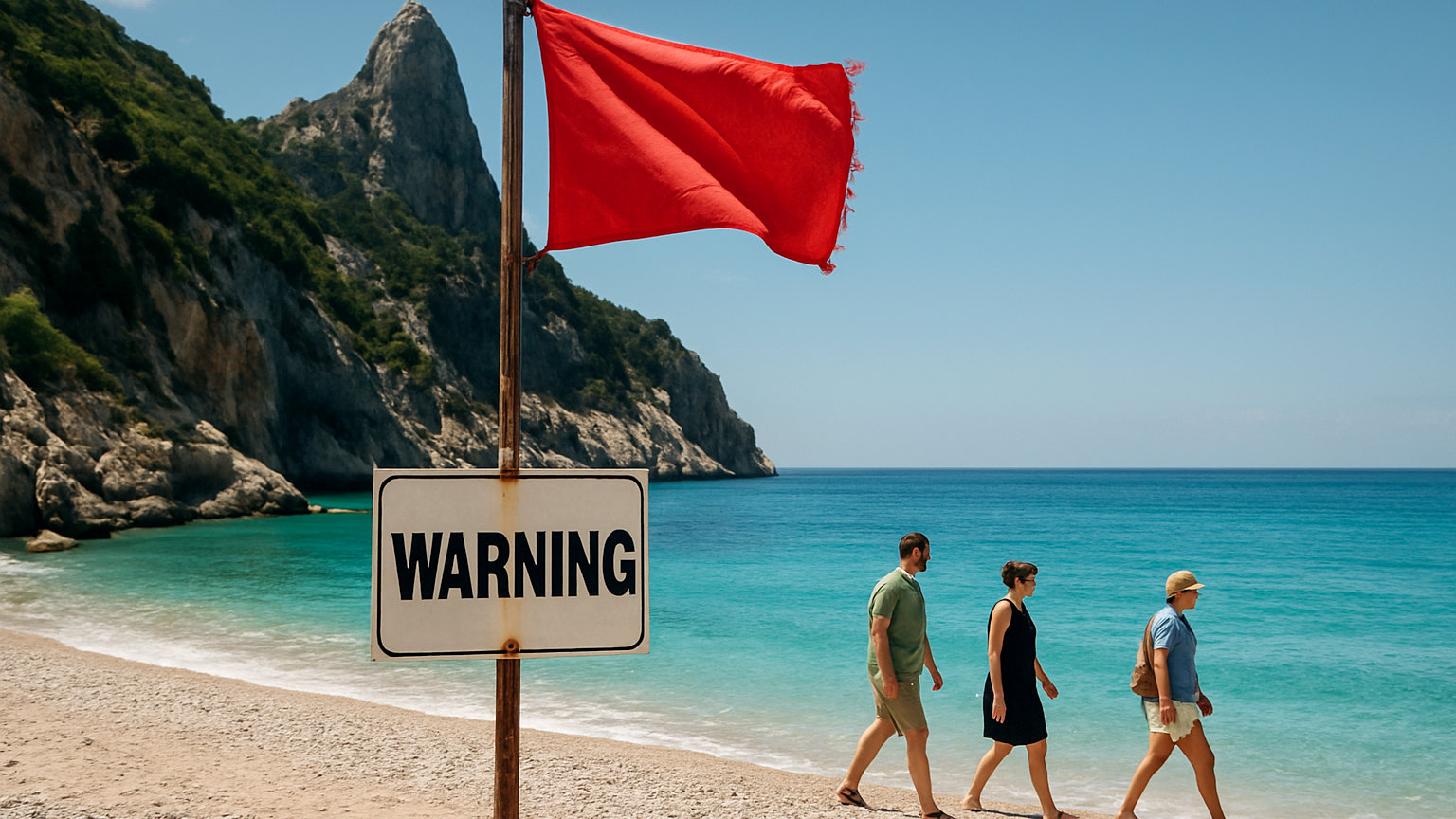
Most European beaches with lifeguard cover use a colour flag system that is broadly consistent across countries. It is posted at the entrance, changes through the day, and is more frequently ignored than any other piece of safety information in travel.
What do the colours mean?
Green means conditions are calm and swimming is permitted. Yellow means caution, with conditions requiring care and usually a restriction on swimming out. Red means swimming is prohibited because conditions are dangerous. Two red flags means the beach is closed to the water entirely.
Why does red matter?
Because it is flown for a reason, usually rip currents, large surf or a strong offshore wind. The sea on a red flag day frequently looks manageable from the sand, which is exactly why people enter it. Lifeguards raise red when they judge they could not safely reach someone.
What other flags are used?
A purple or white flag with a marine hazard symbol indicates jellyfish or other marine life. Black and white chequered flags mark zones for surfboards and craft, where swimming is not permitted. A yellow flag with a black ball prohibits inflatables and boards.
Is the system identical everywhere?
Broadly, and with local variation, so reading the board at the beach entrance is worth thirty seconds. Some countries add flags, and the exact meaning of yellow varies between permitting supervised swimming and restricting depth.
When are lifeguards on duty?
Seasonal and limited, typically from late spring to early autumn and within set hours, commonly ten to six or seven. Outside those hours and months the flags are usually not flown at all, which does not mean conditions are safe.
What is a rip current?
A narrow flow of water moving away from the shore, which can carry a swimmer out faster than they can swim back. They occur on surf beaches, particularly on the Atlantic coasts of Portugal, Spain, France and Ireland, and they are the main reason red flags are flown.
The standard advice is not to swim against it, but to swim parallel to the shore until out of the flow, then back in, and to raise an arm and call for help.
Where do rips occur?
Where water returning seawards concentrates, often in a channel between sandbars. They can appear as a calmer or darker strip of water with fewer breaking waves, which is why swimmers sometimes choose exactly the wrong place.
Should you swim outside the flags?
The area between two yellow and red flags is the supervised zone, and swimming within it is the single most effective safety measure available. Beaches frequently have hundreds of metres of unsupervised sand either side.
What about unpatrolled beaches?
Common across Europe, including at beautiful and popular places. On these there is nobody watching, no flags and often no phone signal. Swimming alone on an unpatrolled beach, particularly on an Atlantic coast, deserves considerably more caution.
Who decides the flag?
The lifeguard service on duty, based on the conditions that day and hour, and it changes as the wind and swell change. A green flag in the morning can be red by three in the afternoon, which is why checking on arrival rather than relying on yesterday matters.
What if there is no flag?
It usually means the beach is unpatrolled or outside the season rather than that conditions are safe. Many of the best beaches in Europe have no service at all, and on those the assessment is entirely yours.
Does the system cover inland water?
At supervised lake and river bathing areas in several countries, yes, using the same colours. Austrian, Italian and Swiss lake lidos and some French river beaches operate flags and lifeguards through the summer season.
Where Are the Best Beaches for Swimming? goes into more detail on a closely related question, and the rest of our Inspiration section covers the wider subject.
The short answer
Green means safe, yellow means caution, red means do not enter the water and two reds means the beach is closed. Swim between the yellow and red flags where lifeguards patrol, and treat red as absolute even when the sea looks calm from the sand.