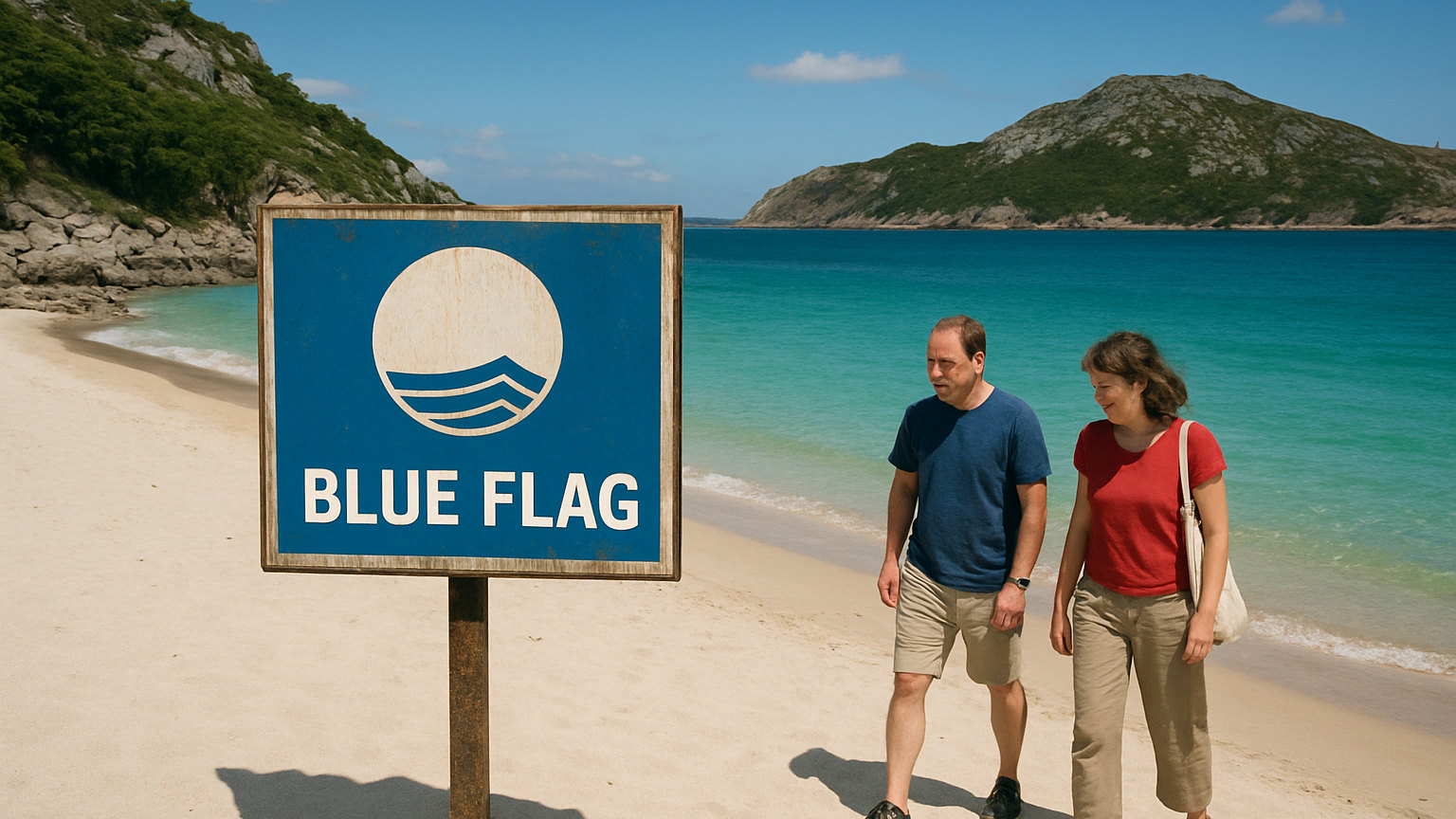
The Blue Flag is the most visible beach award in Europe and among the most misread. It certifies a set of measurable standards, principally around water quality, safety and management, and it makes no assessment of how attractive a beach is.
What does it certify?
Bathing water quality meeting strict standards, environmental management and education, safety provision including lifeguards or rescue equipment, and services such as toilets, drinking water and waste disposal. Beaches must apply annually and can lose it.
What does it not tell you?
Whether the beach is beautiful, quiet, sandy or pleasant. A developed urban beach with good facilities scores well; a spectacular remote cove with no toilets and no lifeguard cannot qualify at all. The award effectively favours managed beaches.
Who runs it?
An international non-governmental organisation operating in dozens of countries, with national operators administering it locally. It covers marinas and boat operators as well as beaches.
Which countries have the most?
Spain consistently leads in Europe by a wide margin, followed by Greece, Turkey, Italy and Portugal. The numbers reflect both coastline and how actively national bodies pursue the scheme, so they are not a straightforward ranking of quality.
Is it useful when choosing?
As a signal about facilities and water, genuinely. If you want toilets, fresh water, lifeguard cover and reliable water quality, it is a good filter. If you want an empty cove, it is close to a filter for the opposite.
How else can you check water quality?
EU bathing water is monitored and published by beach, with results available through national environment agencies and the European Environment Agency. This covers far more beaches than the Blue Flag and is the better source for water quality alone.
Quality across the EU is generally high, with the large majority of monitored sites rated excellent.
Can a beach lose it?
Yes, and temporarily during the season if water quality drops, usually after heavy rain causing runoff. A flag lowered mid-season is a genuine signal and worth noticing rather than ignoring.
Does it mean lifeguards are present?
Some form of safety provision is required, which may be lifeguards or rescue equipment with trained personnel available. It does not guarantee a lifeguard is on duty at the hour you arrive, and seasonal cover still applies.
Should it decide your choice?
As one input among several. It is most useful for families wanting facilities and reassurance, and least useful for anyone seeking quiet or drama. Many of the best beaches in Europe have never held one and never will.
Are there other schemes?
Several national ones alongside it. Spain, Portugal, France and Italy all operate their own quality or environmental marks, and some countries award a separate accessibility certification for beaches with ramps, amphibious chairs and assistance.
What about accessible beaches?
A growing and useful category. Spain in particular has many beaches with boardwalks, amphibious wheelchairs and trained assistance in season, usually listed by the regional tourist board rather than under the Blue Flag scheme.
Does it apply to lakes?
Yes, and inland bathing sites in Germany, Hungary, Austria and Scandinavia hold Blue Flags on the same criteria. Lake bathing is monitored under the same EU bathing water rules as the coast, which is worth knowing if you swim inland.
Is it checked independently?
Applications are assessed against published criteria by national juries and an international body, with water sampling required through the season. It is a certification rather than a marketing badge, which is the main reason it carries weight. Beaches are reassessed every year rather than holding the award indefinitely, so a current flag reflects current conditions.
Which Beaches Are Best for Families? goes into more detail on a closely related question, and the rest of our Inspiration section covers the wider subject.
The short answer
It certifies water quality, safety provision and facilities rather than beauty, which means it favours managed beaches over wild ones. Useful for families wanting reassurance and irrelevant for finding an empty cove. For water quality alone, the EU bathing water data covers far more beaches.