
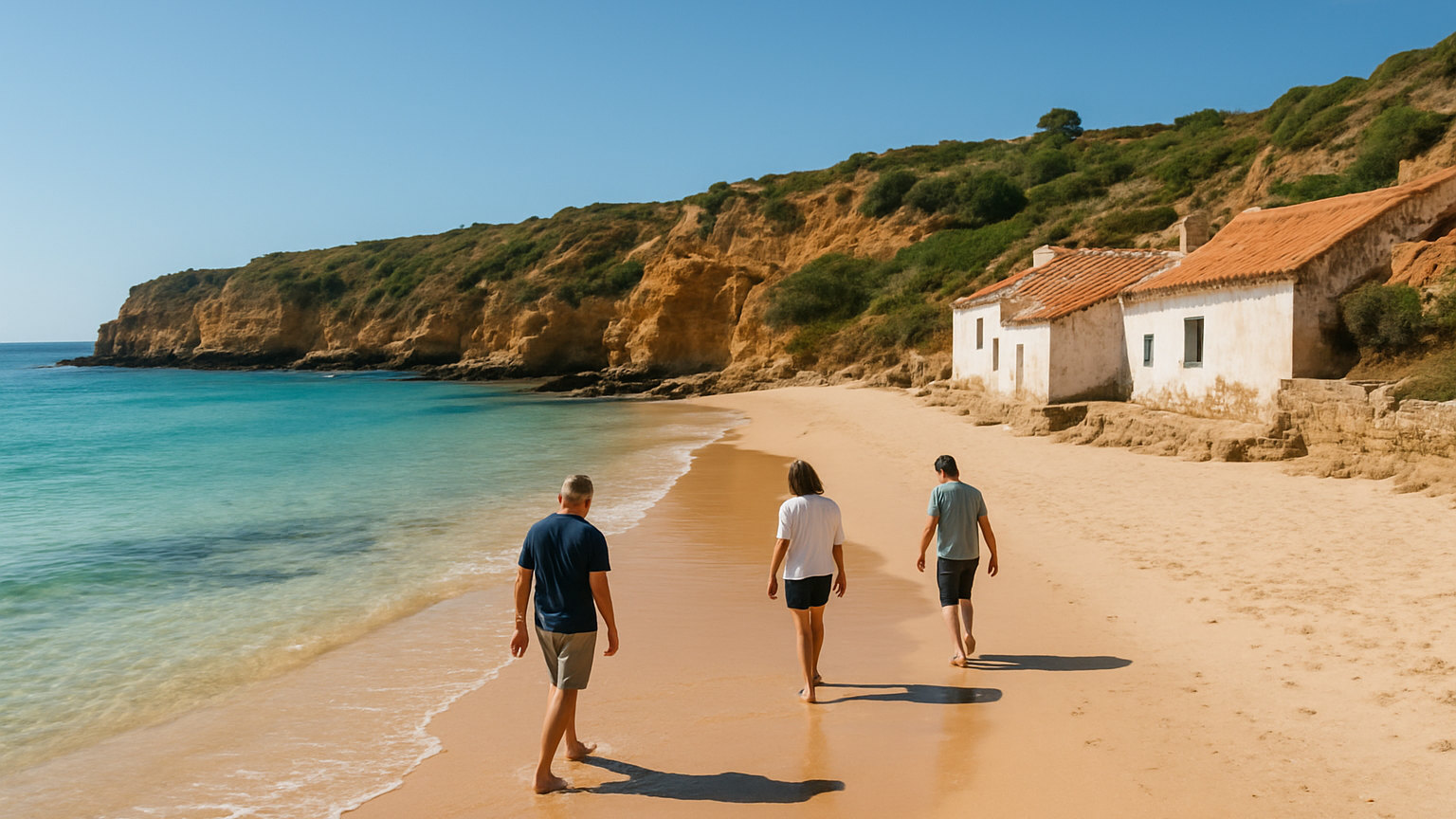
The best sand in Europe is on the Atlantic, where ocean swell grinds it fine and long shores accumulate it. Much of the Mediterranean is pebble, shingle or coarse sand, with specific regions as notable exceptions.
Where is the best Atlantic sand?
The Algarve and the Portuguese west coast, the Costa de la Luz in southwest Spain, the Landes and Biarritz coast of France, and the west of Ireland. All have kilometres of fine sand and, being Atlantic, colder water and real surf.
Which Mediterranean regions have real sand?
Sardinia, which has the finest in the Mediterranean, particularly the Costa Smeralda, Is Arutas and the southwest. Corsica. Parts of Sicily. The Salento in Puglia. Formentera and parts of Menorca and Ibiza.
Sardinian sand is fine enough that removing it is prohibited and enforced with fines.
What about Greece?
Mixed by island, which is worth checking rather than assuming. Crete, Rhodes, Kos, Naxos and Lefkada have long sandy beaches. Santorini has black volcanic sand and pebble. Many Cycladic and Ionian beaches are coarse sand or shingle with very clear water.
Where are the longest beaches?
The Baltic coasts of Poland, Germany, Lithuania and Latvia, which have enormous uninterrupted sand and cold water. The Curonian Spit and the Polish coast in particular run for many kilometres and are almost empty outside July and August.
Which are the whitest?
Sardinia, Formentera and parts of Greece, where fine pale sand and clear shallow water produce the turquoise colour usually associated with the tropics. Elafonisi and Balos in Crete have pink-tinged sand from crushed shell.
What about Croatia?
Almost entirely pebble and rock, which surprises first-time visitors expecting sand. The water is exceptionally clear as a result. Sandy beaches exist and are few, with Lopar on Rab and parts of the Peljesac peninsula among them.
Where is the sand warmest underfoot?
Dark volcanic sand in the Canaries, Sicily, Santorini and Iceland, which absorbs heat and becomes genuinely too hot to cross barefoot in the middle of the day. Sandals for the walk to the water are not optional on these.
Which combine sand with warm water?
Sardinia, Puglia, Crete and the Turkish coast, all with proper sand and Mediterranean water temperatures. This combination is rarer than it sounds, since the best Atlantic sand comes with considerably colder sea.
Do you need to book a sunbed?
On organised Italian and Spanish beaches in August, frequently yes, and many sell by the day or week in advance. On wilder Atlantic and Greek beaches there is usually no service at all, which is part of the appeal.
Where is the sand deepest?
Dune systems, which are worth knowing about separately. The Dune du Pilat near Arcachon is the tallest in Europe, and the dunes of the Curonian Spit, Maspalomas in Gran Canaria and the Corralejo dunes in Fuerteventura are all substantial landscapes rather than beaches with sand behind them.
Can you take sand home?
No, and in several places it is an offence carrying a significant fine. Sardinia enforces this at the airport, and Italy, Greece and the Canaries all have restrictions. Shells and pebbles are also protected at many sites.
Which have the best sunsets?
West-facing Atlantic beaches in Portugal and Spain, which look straight into the ocean.
What about beaches with rivers?
Worth knowing about, since a river mouth changes everything: cooler water, a current, more sediment and frequently better birdlife. Some of the best Portuguese and Spanish beaches sit beside estuaries, and the swimming there needs more care than on an open shore.
Which are best for walking?
The long Atlantic shores, where you can walk for hours on firm sand at low tide. The Portuguese west coast, the Landes, the Baltic spits and the west of Ireland all offer that, which is a different pleasure from sitting and one that works year round.
Are Pebble Beaches Worth Bothering With? answers a related question in more depth, and there is more of the same across our Inspiration guides.
The short answer
The Atlantic has the best sand and the coldest water: the Algarve, the Costa de la Luz and the Landes. For sand with warm water, take Sardinia, Puglia, Crete or the Turkish coast. Croatia is almost entirely pebble, and the Baltic has the longest empty beaches in Europe.


