Coffee in Europe varies by country in what is drunk, when, where and at what price. None of it is complicated and all of it is local, and the main thing visitors get wrong is assuming a single international vocabulary applies everywhere.
How does it work in Italy?
A caffe means an espresso, drunk standing at the bar in a minute or two. Cappuccino is a morning drink and rarely taken after a meal, which is a preference rather than a rule anyone will enforce. A macchiato is an espresso with a spot of milk.
Standing at the bar costs considerably less than sitting at a table, which is a legal price difference rather than a service charge.
What about Spain and Portugal?
In Spain, a cafe solo is an espresso, cortado is with a little milk and cafe con leche is the morning drink. In Portugal, a bica or cafe is an espresso, and a galao is a tall milky coffee. Both are inexpensive and taken frequently through the day.
And Austria?
The most elaborate tradition in Europe, with a vocabulary of its own. A melange is close to a cappuccino, an einspanner comes with whipped cream, and a kleiner brauner is an espresso with milk. Viennese coffee houses expect you to stay for hours with a newspaper.
What about Greece and Turkey?
Greek and Turkish coffee is finely ground, boiled and served unfiltered with grounds at the bottom, and ordered by sweetness rather than size. In Greece the frappe and the freddo espresso are the dominant summer drinks and are excellent.
Where is the coffee best?
Italy for espresso, the Nordic countries for filter and for the third wave speciality scene, and Vienna for the setting. Portugal has consistently good and very cheap espresso, which makes it the best value in Europe.
What does it cost?
An espresso at an Italian, Spanish or Portuguese bar costs very little, and the same drink on a famous square costs several times as much for the view. The gap between a neighbourhood bar and a tourist terrace is larger for coffee than for almost anything else.
When do people drink it?
Throughout the day in the south, in small quantities, including after dinner. Milky coffee is a morning drink in Italy, Spain and France, and ordering one after a meal marks you as a visitor without causing any offence at all.
What about filter coffee?
Standard in the Nordics, Germany and the Netherlands, where consumption per head is the highest in the world, and rare in the south. Asking for filter coffee in Italy will produce an americano, which is an espresso with hot water.
What is the coffee house tradition?
A distinct central European institution in Vienna, Budapest, Prague and Trieste, where the cafe is a place to sit, read and work for hours over one drink. This is the opposite of the Italian model and equally authentic.
What comes with it?
Water, frequently, in Italy, Spain and Portugal, served alongside an espresso without being asked for or charged. In Vienna the glass of water is part of the ritual and is refilled. In Greece and Turkey, coffee arrives with a glass of water and sometimes a small sweet.
Where should you sit?
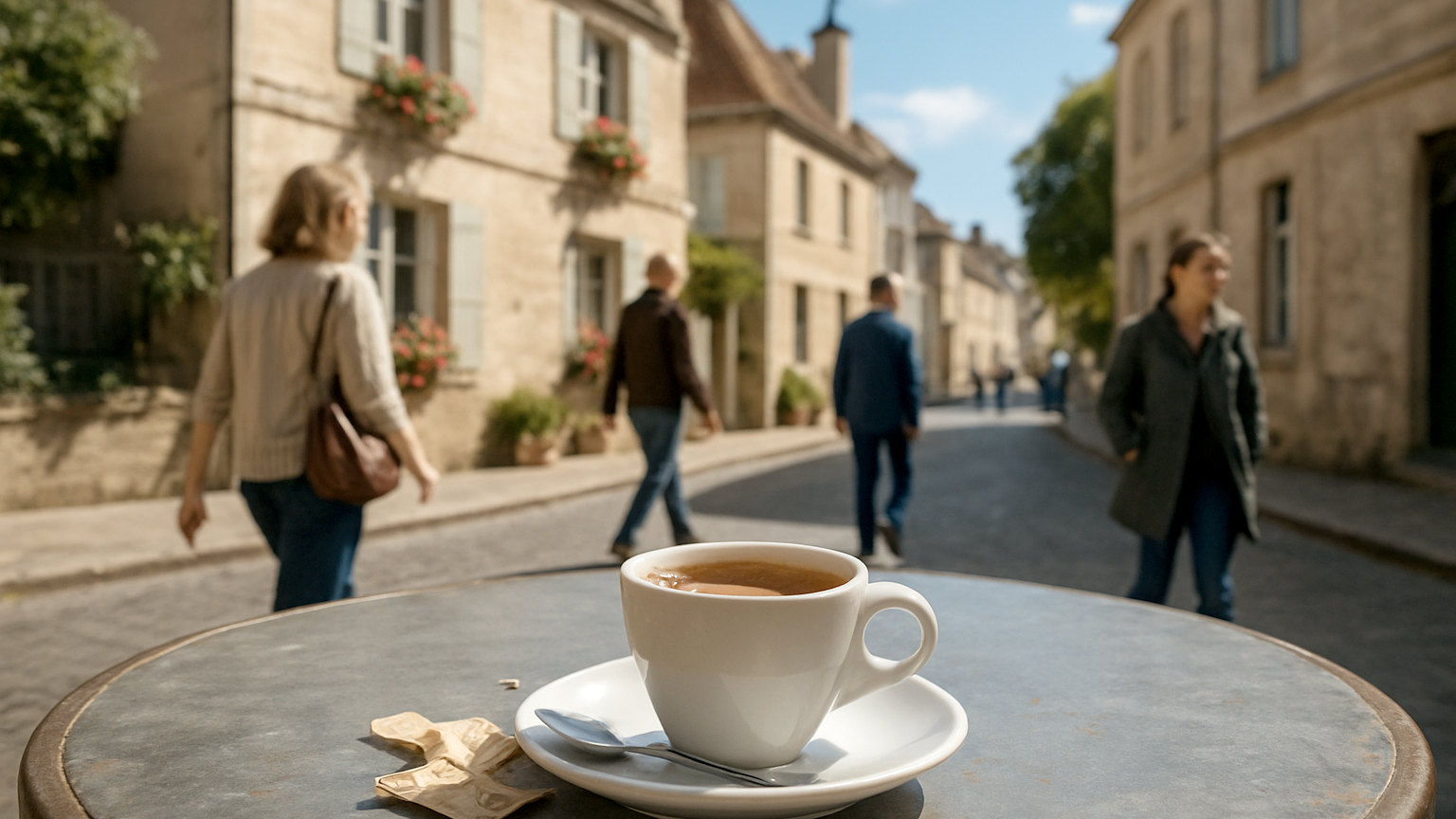
Depends what you want. The bar for speed and price in Italy and Spain, a table for sitting and watching, and a coffee house in central Europe for staying two hours. Knowing which you have walked into saves confusion about the price.
Is takeaway coffee normal?
Less than in Britain, and increasingly available. In Italy, Spain and Austria coffee is traditionally drunk where it is made, and walking down the street with a cup remains unusual. Nobody objects, and you will be in a small minority.
Which Regional Dishes Are Worth Travelling For? goes into more detail on a closely related question, and the rest of our Inspiration section covers the wider subject.
The short answer
A caffe in Italy is an espresso and standing at the bar is cheaper than sitting; cappuccino is a morning drink. Spain and Portugal are similar and very cheap, Vienna has an elaborate vocabulary and expects you to linger, and the Nordics drink filter coffee.