Street food in Europe is less visible than in Asia and no less established. It tends to be regional, tied to markets and festivals, and frequently sold from a fixed stall or a counter rather than a cart.
Where is the tradition strongest?
Palermo, which has the most developed street food culture in Europe, with arancine, panelle, sfincione and several things involving offal that reward an open mind. Naples for fried pizza and pastries. Istanbul for the sheer range.
What about Spain?
Less street food and more bar food, which serves the same purpose. Pintxos in the Basque country, laid out on the counter and taken with a drink, and tapas across the rest of the country. In Galicia, pulpo cooked in the street at fiestas.
What should you try in Portugal?
Pasteis de nata, properly made and eaten warm with cinnamon. Bifana, a pork sandwich. Grilled sardines in summer, which are a street and festival food rather than a restaurant dish. Petiscos, the Portuguese equivalent of tapas.
What about central and eastern Europe?
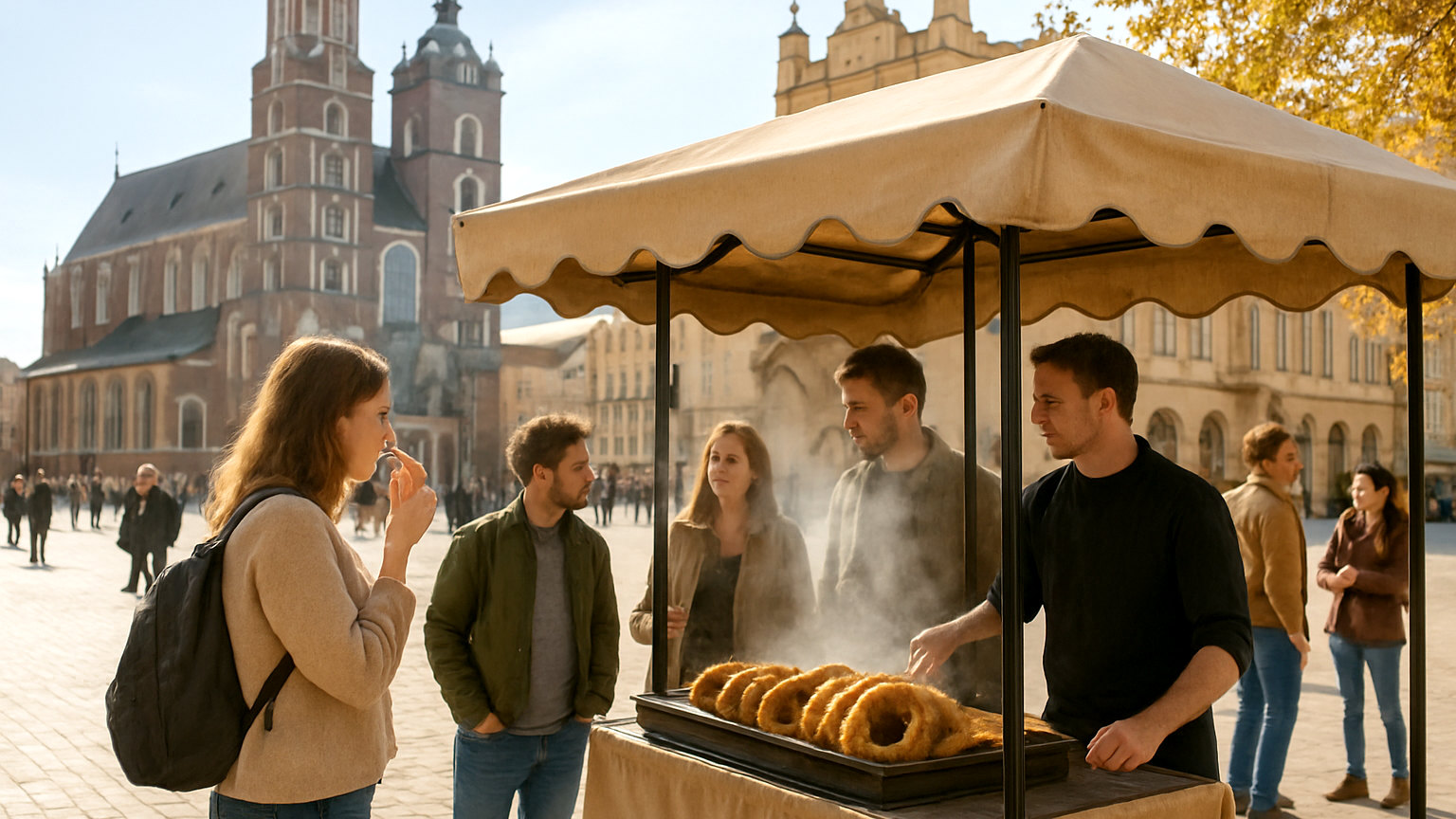
Langos in Hungary, fried dough with sour cream and cheese. Zapiekanka in Poland. Trdelnik in Prague, which is largely a modern invention for visitors. Cevapi across the Balkans, and burek, the filled pastry found from Bosnia to Turkey.
What about the north?
Herring stalls in the Netherlands, eaten raw with onion. Currywurst and bratwurst in Germany. Smorrebrod in Denmark, which is a lunch counter tradition rather than street food. Fish and chips in Britain.
Where is the best market food?
Working market counters everywhere, which are the real home of European street food. Palermo, Athens, Naples, Budapest and the Spanish market bars all serve properly cooked food at a counter for very little.
Is it safe?
Generally yes across Europe, where food hygiene is regulated and enforced. The usual sensible approach applies: busy stalls with high turnover, food cooked to order rather than sitting warm, and anything raw or shellfish treated with more care in hot weather.
What about the tourist inventions?
Several famous street foods are recent creations aimed at visitors, which does not make them bad and does make the claim of tradition doubtful. Knowing which is which is part of reading a place rather than a reason to avoid them.
When is it best?
At festivals and market days, when stalls appear that do not operate the rest of the time. Local saints days, harvest festivals and Christmas markets are all fundamentally food events, and the eating is frequently the best part.
Where do you find it?
Near markets, transport hubs and universities, which is consistent across Europe. Street food follows working people rather than visitors, so the stalls are where people arrive, shop and change trains rather than where the sights are.
What does it cost?
Very little, which is the point. A substantial street lunch in Palermo, Athens, Lisbon or Istanbul costs a fraction of a sit-down meal, and in expensive northern cities it is frequently the only affordable way to eat well at midday.
Is it worth eating standing up?
Frequently better and always cheaper. In Italy the price at the counter is lower than at a table by law, in Spain the pintxos bars are designed for standing, and in both the turnover means the food is fresher. Sitting down is comfort rather than quality.
What about festivals and fairs?
Where the best of it appears. Village fiestas across Spain, Italian sagre devoted to a single ingredient, and Balkan and Greek saints days all involve food cooked in quantity outdoors. A sagra in an Italian village is among the best eating available anywhere and costs very little.
Anyone weighing this up will also want How Does Tipping Work in European Restaurants?, along with the rest of the Inspiration section.
The short answer
Palermo has the deepest tradition, Istanbul the widest range, and working market counters across Europe the best value. Try pintxos in the Basque country, pasteis de nata in Portugal and burek across the Balkans, and go at festivals when the stalls appear.