
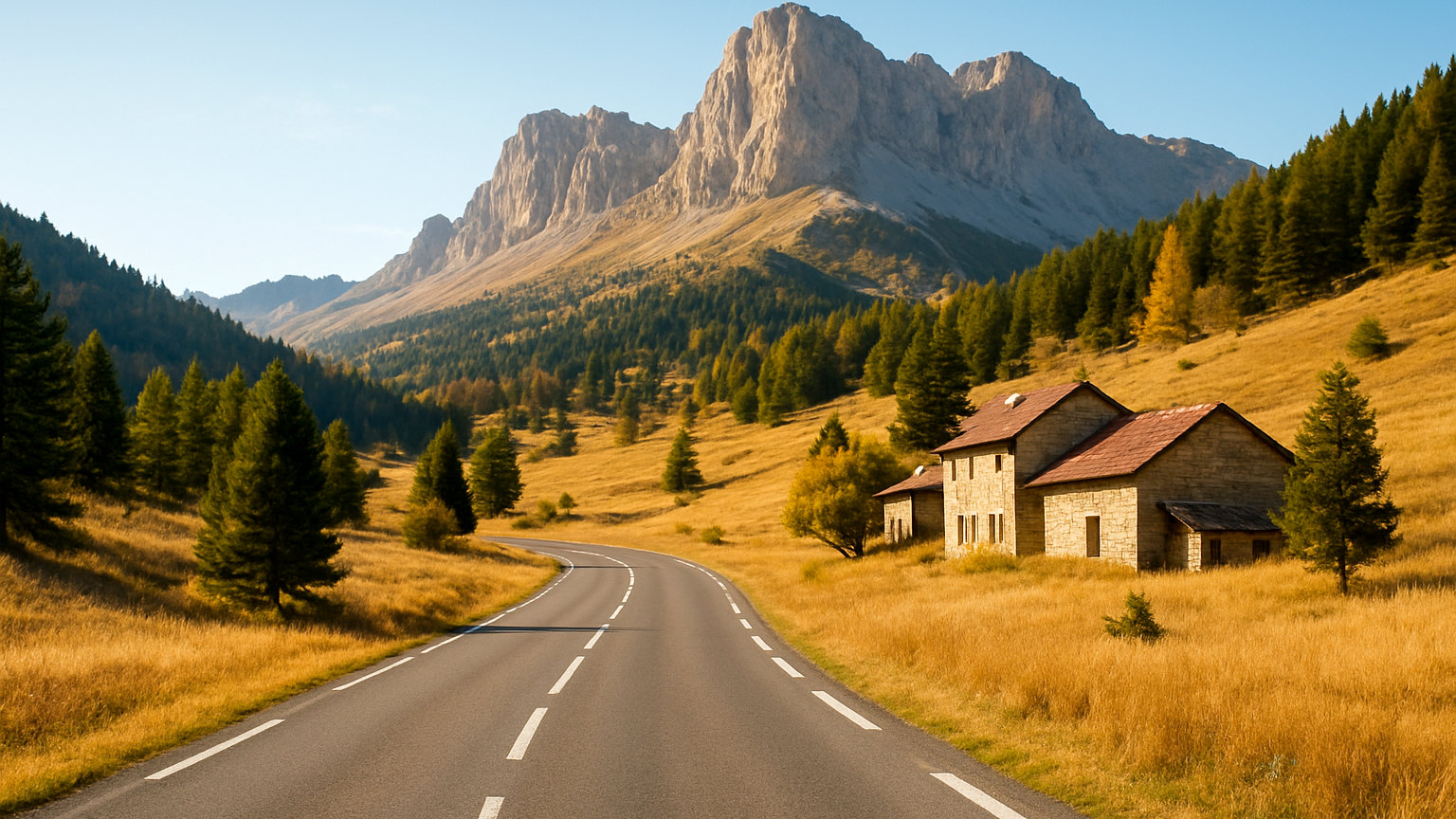
Mountain driving in Europe is well engineered and entirely manageable, and it requires a different technique from motorway driving. The hazards are predictable: long descents, blind hairpins, narrow sections and weather that changes within an hour.
How should you descend?
In a low gear, using the engine to hold the speed rather than the brakes. Riding the brakes on a long descent overheats them and reduces their effectiveness, which is the single most common serious mistake on alpine roads.
If the brakes begin to smell or feel soft, stop somewhere safe and let them cool.
What about hairpins?
Take them wide on approach and slow before rather than during. Many are blind, and traffic coming the other way may be using more of the road than it should. Sounding the horn on a blind bend is normal practice on narrow mountain roads.
Who has priority?
On narrow mountain roads, the vehicle climbing usually has priority, since reversing uphill is harder. Buses and lorries need the whole road on hairpins and should be given it. On single-track roads with passing places, the rule is to pull in or wait opposite.
What about the weather?
Changes quickly and considerably. Cloud, rain and fog can arrive within an hour, and temperatures at the top of a pass are far below the valley. Checking the forecast and the pass status before setting out is routine rather than cautious.
When are the passes open?
High alpine passes generally open around June and close with the first serious snow, typically in October, with dates varying by year. Several are closed permanently in winter and the tunnel alternative is tolled.
What about winter driving?
Winter tyres are legally required in several European countries during defined periods or in given conditions, and snow chains are required on some roads when signs indicate. Rules differ by country and by year, so check both for your route and confirm what a hire car carries.
What about fuel?
Stations are scarce in mountain areas, with long gaps and restricted hours, including closures on Sundays in parts of central Europe. Filling before a pass rather than after is the habit, and half a tank should be treated as low.
Does altitude affect the car?
Modern engines cope, and performance is noticeably reduced at high altitude, particularly when loaded. Allow more distance for overtaking and expect the car to feel slower on climbs.
What about tunnels?
Long alpine tunnels have their own rules: headlights on, safe distance maintained and no overtaking. Several are tolled separately. Radio frequencies for emergency information are posted at the entrance.
What if you meet something you cannot pass?
Reverse to the nearest wider point, which is normal and expected on these roads. Patience rather than assertiveness is what makes narrow mountain driving work, and local drivers are generally accommodating.
What about cyclists and motorcycles?
Present in large numbers on alpine roads from June to September, climbing slowly and descending fast. Passing a cyclist on a hairpin needs patience and room, and motorcycles frequently overtake where a car would not. Expecting both changes how you take blind bends.
Are the tunnels an alternative?
Frequently, and worth knowing about when a pass is closed or the weather turns. The major alpine tunnels run year round and are tolled, and taking one rather than a pass in poor conditions is the sensible choice rather than a defeat.
How do you judge a road in advance?
Satellite and street view, which show the width, the surface and whether there are barriers. A road that looks like a thin line on a map may be a well-engineered pass or a single-track lane with drops, and two minutes of looking distinguishes them.
If you are planning further, What Should You Do About Breakdowns and Emergencies? covers the next part of the decision, and there is more in our Inspiration guides.
The short answer
Descend in a low gear using the engine rather than the brakes, slow before hairpins and give climbing traffic priority. Check the pass status and forecast before setting out, fill up before a pass, and confirm winter tyre and chain requirements for each country in season.


