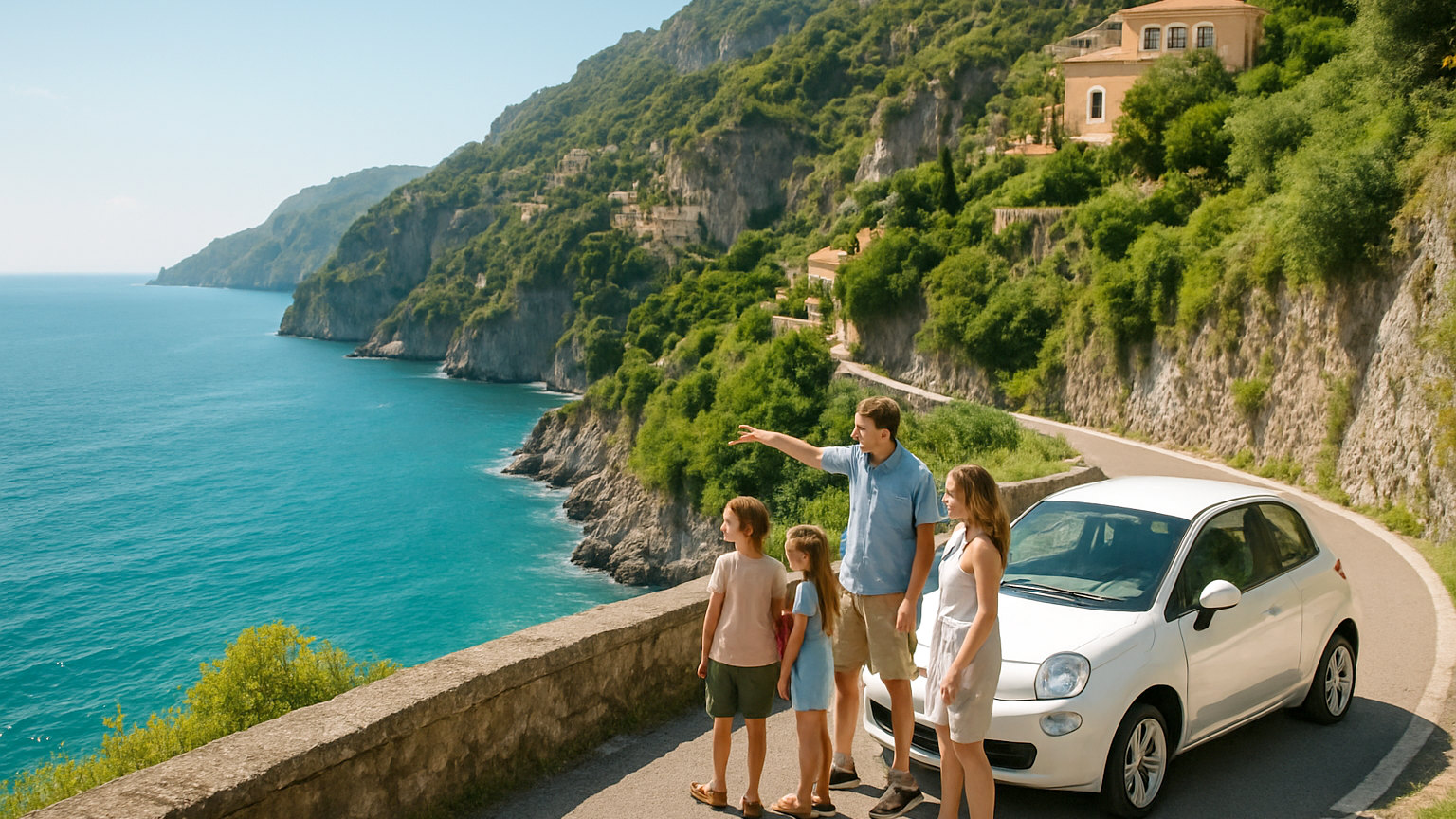
A road trip gives a family space, flexibility and somewhere to put everything, which makes it one of the better formats for travelling with children. It works when the driving is short and frequent stops are built in, and fails when the route is the point.
Which routes work?
France, which is built for family driving with well-spaced service areas and short distances between towns. The Dutch and Belgian coast. Andalusia. Puglia. Ireland. All have short hops and plenty to stop for.
Which do not?
Anything with long mountain sections, single-track roads or sustained hairpins, which cause motion sickness and take far longer than the map suggests. Iceland and the Scottish Highlands are excellent trips and hard work with young children.
How far should you drive?
Ninety minutes to two hours between proper stops, and no more than three hours of driving in a day. That is roughly half what adults alone would plan, and building the trip around it prevents most of the difficulty.
What about child seats?
Required across Europe with rules varying by age and height. Hire company seats are charged per day and of variable quality, and the cost over two weeks frequently approaches buying one. Many families take their own for that reason.
Check the specific requirements for each country on your route, since the thresholds differ.
What about motion sickness?
Common on winding roads and worth planning for. Sitting where the road ahead is visible, fresh air, avoiding screens on twisty sections and stopping at the first sign all help. Remedies are available and are best taken before setting off.
What makes a good stop?
Somewhere to run. A playground, a beach, a lake or a park does more for the rest of the drive than a cafe, and French and German motorway service areas frequently have them. A stop where children sit down is not a break.
Where should you stay?
Places with parking and a pool, which is the combination that makes a driving holiday work. Rural properties, agriturismi and family-run hotels outside towns are usually better than anything in a historic centre with a car.
How many bases?
Fewer than an adult trip. Two or three across a fortnight, with day trips from each, rather than moving every two nights. Children settle into a base and every change costs a day of adjustment as well as the drive.
What should you carry?
Water, snacks, a first aid kit, sun shades for the windows and something for each child to do. A cool box is genuinely useful on a southern European trip and removes the need to stop for every drink.
Is it better than flying and staying put?
Different rather than better. A road trip suits families who want to see several places and have the patience for the driving; a single base with a pool suits those who do not. Being honest about which you are is the main decision.
What about long transfer days?
Better taken early in the day or, on a very long leg, split with an overnight stop. An early start while children are fresh covers more ground than an afternoon departure, and motorway service areas in France and Germany are set up for exactly this.
Does a bigger car help?
For luggage and space between children, yes, and it makes narrow roads and parking harder. An estate or a small people carrier is usually the right compromise, and anything larger becomes difficult in historic towns.
How do you keep the car tidy?
A bin bag and a box in the footwell, which sounds trivial and prevents the slow accumulation that makes a car unpleasant by the second week. Doing it at each fuel stop takes a minute and keeps the space usable.
Should you book accommodation ahead?
With children, yes. Arriving somewhere at six with tired children and no room is considerably worse than losing some flexibility, and rural properties with pools fill early in summer.
What Should You Know About Driving in the Mountains? is the natural next read, alongside the wider Inspiration section.
The short answer
France, Andalusia, Puglia and Ireland suit families best, with short hops and plenty to stop for. Drive no more than three hours a day with a break every ninety minutes, choose stops where children can run, and take two or three bases rather than moving constantly.