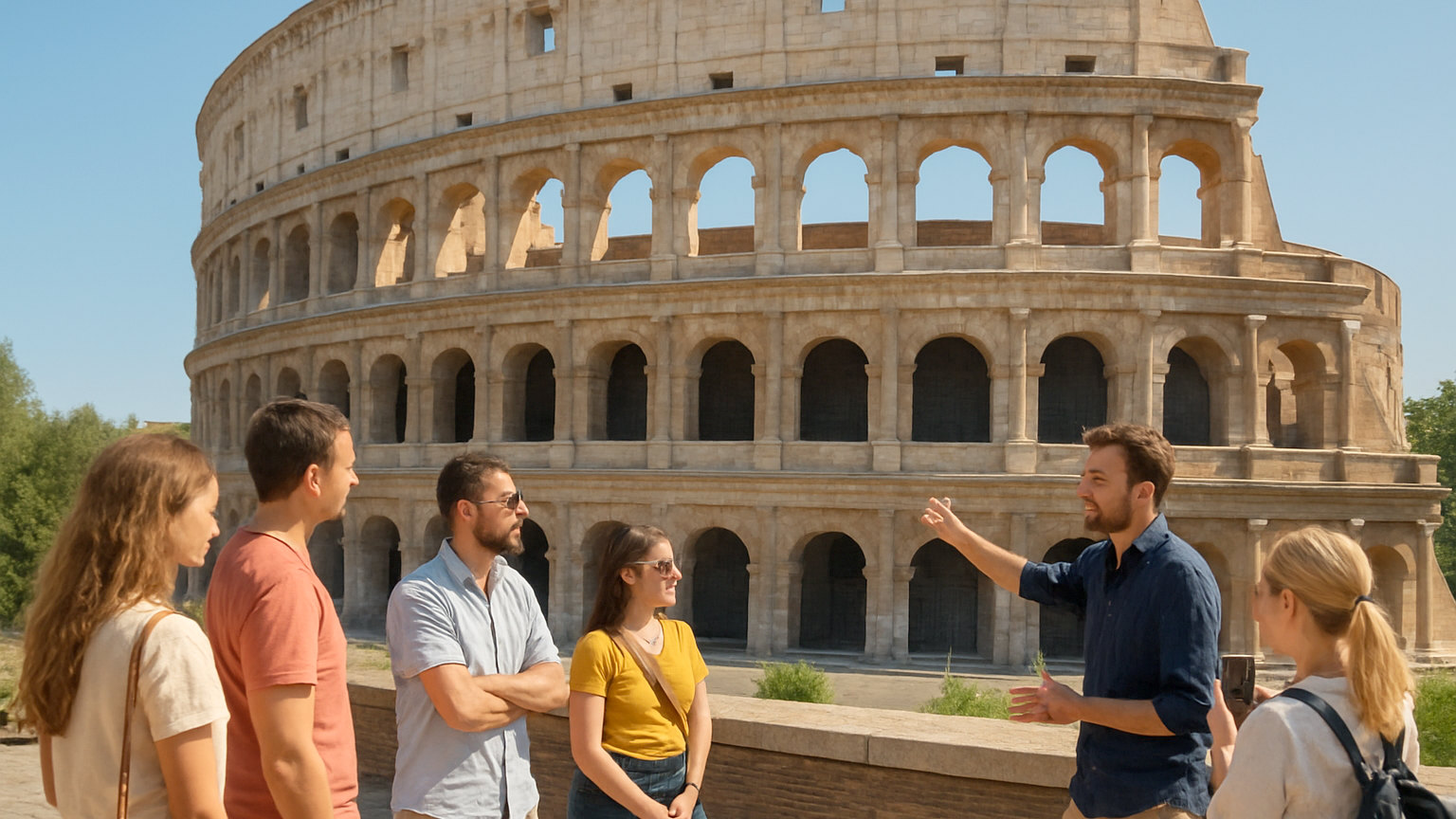
Guided tours divide opinion because the quality varies so widely. A knowledgeable guide with a small group transforms a site that would otherwise be stones and a plaque; a microphone leading forty people through a script is worse than going alone.
Which sites need one?
Archaeological sites above all, where ruins are genuinely hard to read without help. Pompeii, Ephesus, the Roman Forum and Delphi are all transformed by explanation and are underwhelming without it. Large museums benefit similarly.
Which do not?
Anywhere the appeal is visual and immediate: viewpoints, gardens, markets, most cathedrals and most old towns. These reward wandering, and a commentary adds less than the freedom to stop where you want.
What about free walking tours?
A genuine institution in most European cities and frequently very good. The guide is paid entirely by what the group gives at the end, which is the arrangement rather than a courtesy, and a reasonable contribution for a two-hour tour is expected.
They work best on the first morning of a trip, as orientation rather than depth.
How much does group size matter?
More than anything else. Eight people can ask questions and hear the answers; forty cannot, and the tour becomes a broadcast. Small group tours cost more and are usually worth the difference.
What is a licensed guide?
In Italy, Greece and several other countries, guiding at official sites requires a licence involving examination in history and art history. It is a genuine qualification and a reasonable marker, though enthusiasm and communication matter as much.
Do tours skip the queue?
At many major sites, yes, since tours enter through a separate door with a reserved allocation. In July that can save an hour or more, which is frequently the practical reason people book them.
Are audio guides a substitute?
Partly, and they are cheaper and self-paced. The good ones at major museums are excellent. What they cannot do is answer a question, which is what a real guide is for.
How do you choose one?
Reviews naming the guide, which is the strongest signal, alongside a stated maximum group size. Tours described as skip the line with no mention of the guide are selling access rather than knowledge.
What about private guides?
Expensive per hour and frequently good value for a family or small group, since the cost is shared and the tour is shaped around you. Half a day with a private guide in Rome, Athens or Istanbul is among the better uses of a travel budget.
When are they a poor idea?
On a first morning in a city you want to absorb slowly, on anything you would rather photograph than analyse, and when the tour is longer than your attention. Three hours is a long time to listen.
What about themed tours?
Frequently better than general ones, since a food tour, an architecture walk or a tour of a single district has a subject rather than a checklist. These also tend to attract smaller groups and more knowledgeable guides.
What language do they run in?
Worth confirming, since multilingual tours split the guide attention and halve the content. An English-only departure is better than a bilingual one, and the popular sites run separate language groups at set times.
Are they worth it out of season?
More so, since the queue advantage disappears and what remains is the guide, which is the part actually worth paying for. Winter tours also run with smaller groups, which improves them considerably at no extra cost.
How long should one be?
Two to three hours is the practical limit for a walking tour and two hours inside a museum. Anything longer outruns most people attention regardless of the guide, and half-day tours that promise six sites usually deliver a march.
If you are planning further, Which European Walks Are Worth Doing? covers the next part of the decision, and there is more in our Inspiration guides.
The short answer
Worth it at archaeological sites and large museums, and largely unnecessary at viewpoints, gardens and old towns. Check the group size above everything, read reviews naming the guide, and consider a private guide for a family since the cost is shared.