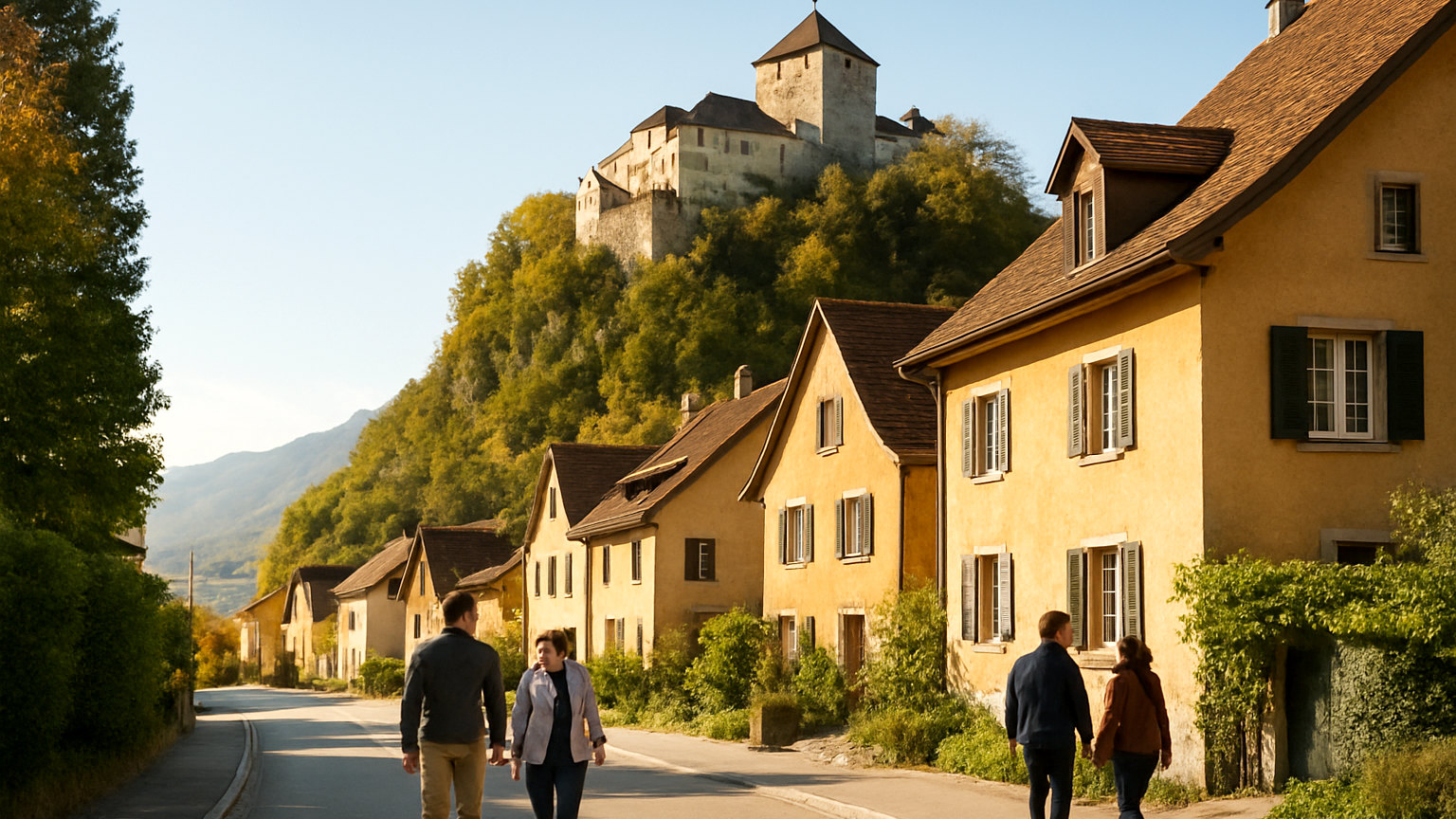
Vaduz is the capital of Liechtenstein and one of the smallest in the world, with a population of around five thousand. It occupies a single main street beneath a castle, and the realistic answer to what there is to do is half a day in the town and considerably more in the mountains above it.
Can you visit the castle?
Not inside. Vaduz Castle is the private residence of the princely family and is closed to the public, though the exterior can be reached on a steep walk of around twenty minutes from the town with good views over the Rhine valley.
What is on the main street?
The Kunstmuseum Liechtenstein, a modern art gallery holding the princely collections. The national museum. The postal museum, which is small, free and more interesting than it sounds given the country philatelic history. A handful of shops and cafes.
Can you get a passport stamp?
Yes, from the tourist office for a small fee, which is a novelty rather than an official entry stamp. It is among the most requested things in the country, since there is no border control with Switzerland or Austria.
What about the wine?
The Prince of Liechtenstein maintains vineyards on the slope beside the town, and the cellars sell locally and offer tastings. It is a small production and a pleasant hour.
What is above the town?
The real reason to come. Liechtenstein is an Alpine country and the trail network is excellent, including the Liechtenstein Trail running the length of the principality. Malbun, half an hour up a mountain road, is a small ski resort in winter and a walking base in summer.
How long do you need?
Half a day for Vaduz itself and two or three days if you intend to walk. Most visitors treat it as a stop between Switzerland and Austria rather than a destination.
How do you get there?
There is no airport and no railway station in Vaduz. Buses run from Sargans and Buchs in Switzerland and from Feldkirch in Austria, all within half an hour, and Zurich airport is around ninety minutes away.
What currency is used?
The Swiss franc, and prices are Swiss. Liechtenstein is in a customs union with Switzerland and inside the Schengen area, so there is no border check arriving from either neighbour.
Is it expensive?
Yes, on the Swiss scale. Eating out and accommodation both cost accordingly, which is another reason most people visit for a day from cheaper bases nearby.
When should you go?
June to September for walking, and winter for Malbun, which is small, uncrowded and suits families and beginners rather than serious skiers.
Is it worth the detour?
For the mountains and the curiosity of a micro-state, yes. For the town alone it is a brief visit, and anyone expecting a capital city will find something closer to a large village.
Is it walkable?
Entirely, and it takes about fifteen minutes to cross. The pedestrianised centre holds the museums, the government buildings and the shops within a few hundred metres, which is part of why half a day is sufficient.
What language is spoken?
German, with an Alemannic dialect locally, and English widely understood in anything tourism-facing. Signage is in German and communication is straightforward.
What else is in Liechtenstein?
Balzers with its castle on a rock, Triesenberg with its Walser heritage museum, and the Rhine cycle path running the length of the country. The whole principality is around twenty-five kilometres long, so everything is within half an hour.
Is it busy?
Coach parties stop for an hour in the middle of the day and the main street is briefly crowded. Early morning and late afternoon it is very quiet.
Anyone weighing this up will also want What Can You Do in San Marino in a Day?, along with the rest of the Inspiration section.
The short answer
Half a day covers Vaduz: the Kunstmuseum, the postal museum, the walk up to the castle exterior and a passport stamp from the tourist office. The mountains and the Liechtenstein Trail are the real attraction, and Malbun is the winter base.