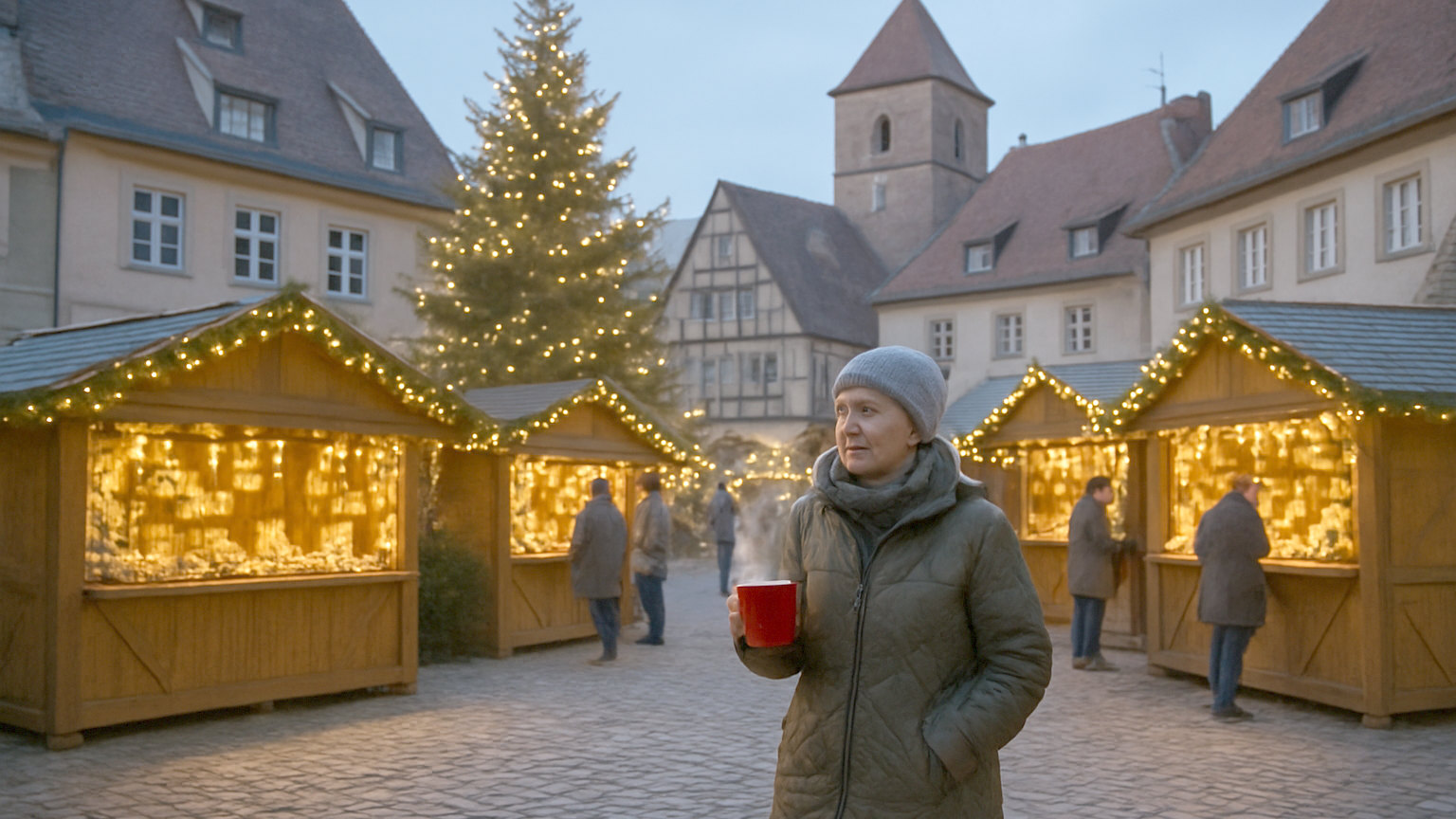
Christmas markets are among the most concentrated crowds in European travel, because everyone wants to be in the same square on the same December Saturday evening. The crowding is entirely predictable, which means most of it can be sidestepped without changing destination.
Which days are worst?
Saturdays, decisively, followed by Fridays and Sundays. German and Austrian markets draw very large numbers of domestic weekend visitors, and the difference between a Saturday evening and a Tuesday one at the same market is not marginal.
What time is best?
Late afternoon, from around four when the lights come on and before the after-work crowd arrives at six. Or after about nine, when families have gone and the stalls are quieter. The worst window is six to nine in the evening.
Weekday lunchtimes are very quiet and lack the atmosphere entirely, since the markets depend on being lit.
Which weeks are busiest?
The two weekends before Christmas, which combine peak crowds with peak accommodation prices. The last week before Christmas is busy throughout. The opening weekend in late November is also heavy with local visitors.
When is quietest?
Midweek in the first half of December, which is the single best window. The markets are fully operating, the weekend crowds have gone and accommodation is at its lowest December rate.
Which markets fill first?
The famous ones in confined spaces. Prague Old Town Square, the Vienna Rathaus market, Nuremberg main square and the Cologne cathedral market are all physically constrained and receive enormous numbers, which makes moving through them slow on a busy evening.
What are the alternatives within a city?
The secondary markets, which most cities have and few visitors seek out. Vienna has a dozen beyond the Rathaus, including Spittelberg and Karlsplatz, both far calmer. Cologne has seven. Berlin has over eighty. The secondary ones are frequently better as well as quieter.
Should you choose a smaller town?
Often the best answer. Bamberg, Regensburg, Quedlinburg, Riquewihr, Ljubljana and Bratislava all have genuine markets with a fraction of the visitors. A town of fifty thousand delivers the atmosphere without the crush of a capital.
What about the day trips?
Coach day trips from British departure points concentrate arrivals at specific markets on specific days, particularly at Bruges, Lille and Cologne. Those markets are noticeably busier on days when several coaches arrive, which is usually weekends.
Does arriving early in the season help?
Yes, and it is underused. The last days of November and the first week of December have everything open with a fraction of the crowds, since most people associate the markets with mid-December. Prices are lower too.
What if you can only go at a weekend?
Choose a city with several markets so you can avoid the main one at peak hours, go to the famous square at four or after nine, and spend the evening at a secondary market instead. Booking somewhere to eat removes the other queue.
Does the layout matter?
Considerably. Markets in enclosed squares with a single entrance become congested quickly, while those spread along a street or across several small squares absorb the same numbers comfortably. Vienna Spittelberg, which runs through narrow lanes, handles crowds far better than the Rathaus market.
What about pickpockets?
Worth the usual awareness, since dense slow-moving crowds are exactly the conditions they favour, and the major markets in Prague, Vienna and Cologne all see some. Bag closed and in front, nothing in back pockets, and cash split between two places.
Is it worth going twice?
Yes, and it is the simplest fix. Visiting the same market on two evenings, once briefly at four and once late, is far better than one long visit at the peak hour.
It is worth reading alongside What Should You Buy at a Christmas Market?, which takes a different angle, and the wider Seasons guides.
The short answer
Go midweek in the first half of December, visit the famous market at four or after nine, and spend the rest of the evening at the secondary markets most cities have. A smaller town delivers the same atmosphere with a fraction of the crowd.