Food and drink is most of what a Christmas market actually sells, and it is regional rather than generic. What you find in Alsace is different from Saxony, which is different again from Budapest. There is also one piece of mechanics that confuses almost every first-time visitor.
What is the mug deposit?
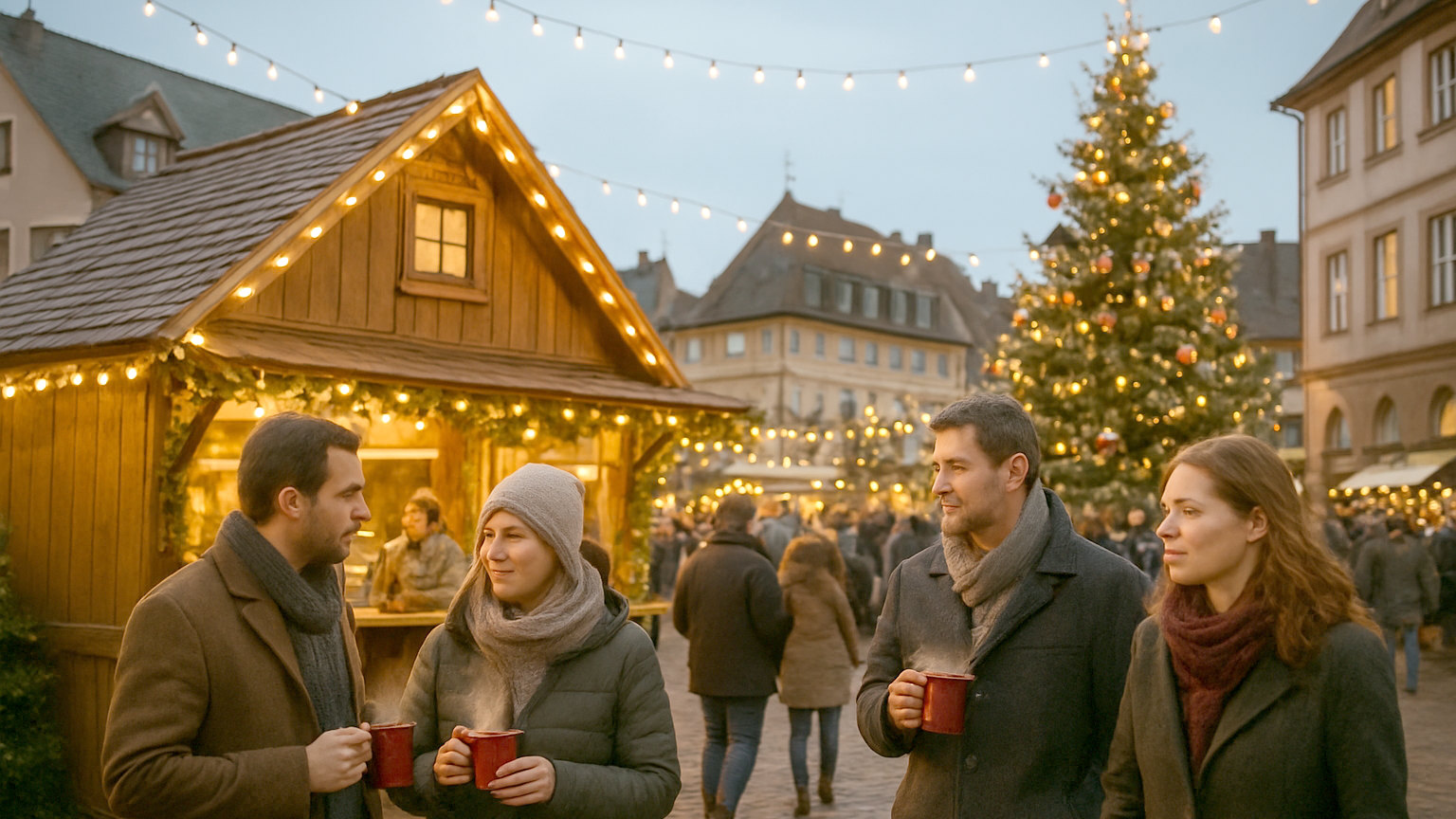
Mulled wine is served in a ceramic mug, and the price includes a deposit of a few euros on top of the drink. Return the mug to any stall of that market and you get the deposit back; keep it and you have effectively bought a souvenir. Many markets issue a different design each year, which people collect deliberately.
Mugs are usually returnable at any stall rather than only the one that served you.
What is gluhwein?
Red wine heated with cinnamon, cloves, star anise and orange, and the reason most people are standing outside in the cold at all. White gluhwein is common in Alsace and southern Germany and is lighter. A shot of rum or amaretto can be added, usually called mit Schuss.
What is Feuerzangenbowle?
Gluhwein with a sugar cone soaked in rum set alight above it so the caramelised sugar drips into the wine. It is a spectacle as much as a drink, considerably stronger than gluhwein, and worth seeking out at the larger German markets.
What should you eat in Germany?
Bratwurst, which differs by region, with the small Nuremberg sausages served three in a roll and the long Thuringian version a different thing entirely. Reibekuchen, fried potato pancakes with apple sauce. Flammkuchen. Roasted chestnuts and candied almonds.
For sweets, Lebkuchen from Nuremberg and Stollen from Dresden, both of which are regional specialities with protected status rather than generic Christmas cake.
What about Austria?
Punsch rather than gluhwein in many stalls, which is fruit-based and often stronger. Kasekrainer sausage. Kaiserschmarrn, shredded sweet pancake with fruit compote. Maroni, roasted chestnuts sold from street braziers across Vienna.
And central Europe?
Budapest has arguably the best market food in Europe, with langos, chimney cake and goulash served properly rather than as tourist food. Prague has trdelnik, which is not actually Czech, and better sausages and svarak, the local mulled wine. Poland has bigos, pierogi and grzaniec.
Is it expensive?
Moderate in Germany and Austria and cheap in central Europe. A mulled wine and something to eat is a reasonable amount in Nuremberg and a fraction of it in Krakow or Zagreb. The mug deposit inflates the first drink and is returned.
Do you need cash?
Frequently yes, particularly in Germany, where many stalls remain cash only and card acceptance is thinner than in most of western Europe. Carry small notes and coins, since change for large notes can be slow.
Is there anything for non-drinkers?
Kinderpunsch, a spiced fruit punch without alcohol, is sold at almost every stall alongside the gluhwein and is served in the same mugs. Hot apple juice and hot chocolate are widespread.
Is there much for vegetarians?
More than there used to be and still limited at traditional German markets, where the food is largely sausage-based. Reibekuchen, flammkuchen, pretzels, roasted chestnuts and cheese dishes such as raclette are widely available. Austrian and central European markets tend to offer more.
What about the sweets?
Gebrannte Mandeln, candied almonds roasted in copper pans, are sold everywhere and are the smell most people associate with the markets. Also Schmalzkuchen, small fried doughnuts, and in Austria the Punschkrapfen, a rum-soaked pink cake.
How do the queues work?
Order at the counter, pay at the same time and stand at one of the tall tables nearby, which are shared. Nobody waits to be seated. Returning the mug to the same counter gets the deposit back, and there is often a separate window for it at busier stalls.
Are Christmas Market River Cruises Worth It? goes into more detail on a closely related question, and the rest of our Seasons section covers the wider subject.
The short answer
Gluhwein in a deposit mug you can return or keep, bratwurst and reibekuchen in Germany, punsch and kasekrainer in Austria, and langos in Budapest. Carry cash, try Feuerzangenbowle once, and look for the regional speciality rather than the generic stall.