Germany invented the Christmas market and has somewhere between two and three thousand of them. The famous ones earn their reputation and the small town versions are frequently more atmospheric, which makes the choice less obvious than the rankings suggest.
What is Nuremberg known for?
The most traditional atmosphere in Germany and strict rules about what may be sold, which keeps out the plastic and the imported goods that dilute other markets. The Christkindlesmarkt fills the main square, and the Christkind opens it in a ceremony from the church balcony.
It is also extremely crowded, particularly at weekends.
Why go to Dresden?
The Striezelmarkt is among the oldest in the world, dating from the fifteenth century, and Saxony has a distinctive craft tradition of wooden carvings, nutcrackers and Christmas pyramids from the Erzgebirge mountains. Dresden also has several markets beyond the main one, including one in the baroque Neumarkt.
What about Cologne?
Scale and variety. Cologne runs around seven markets across the city, each with a different character, and the one beside the cathedral is the most photographed in Germany. They are close enough to walk between and the city is easy to reach.
Is Munich worth it?
Yes, with the Marienplatz market the main one and several smaller ones including a medieval market and one in Schwabing. Munich also gives access to the Bavarian towns and the Alps, which makes it a better base for a longer trip than a single-market city.
Which small towns are best?
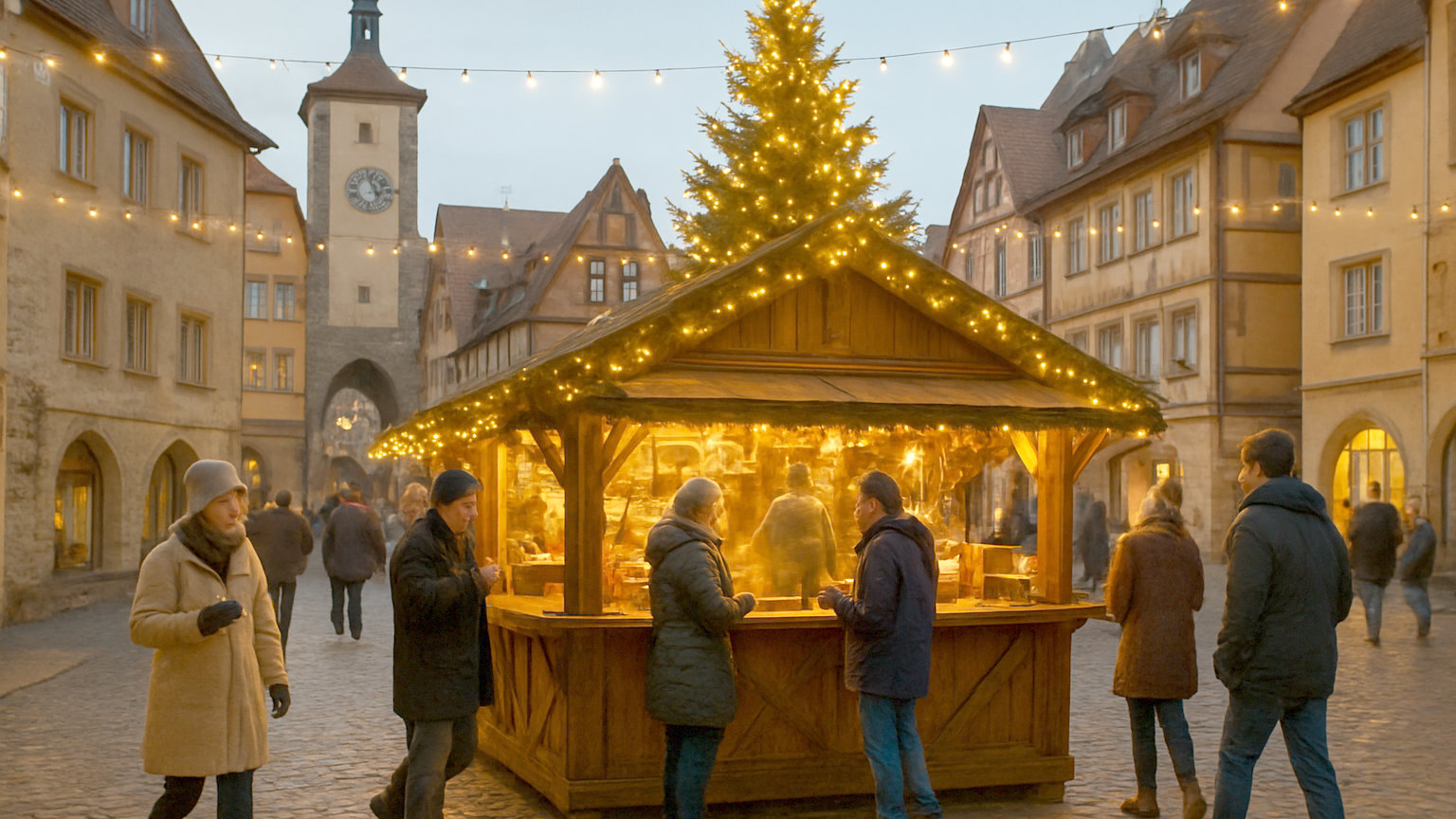
Rothenburg ob der Tauber, a walled medieval town that looks like an illustration and has a year-round Christmas shop. Bamberg, Regensburg, Quedlinburg and Goslar, all with well-preserved old towns. Seiffen in the Erzgebirge, the centre of the wooden toy tradition.
These are quieter, cheaper and frequently more memorable than the large city markets.
Are there unusual ones?
Several. The medieval markets in Esslingen and Siegburg, where stallholders dress in period costume. The market at Ravenna Gorge in the Black Forest, held under a railway viaduct. Several castle markets across Bavaria and Saxony, which require tickets and book out.
How do you get between them?
By train, easily. The German rail network reaches almost every market town, and regional day tickets covering a whole state for a flat fare make a multi-market trip inexpensive. Several regions are dense enough to see three or four markets in as many days without a car.
Which region should you base in?
Franconia around Nuremberg, which covers Bamberg, Rothenburg and Wurzburg. Saxony around Dresden, which covers Leipzig, Seiffen and the Erzgebirge towns. Both give several markets within an hour or two by train.
When should you go?
Midweek in the first half of December. German markets are busiest at weekends, when domestic visitors arrive in large numbers, and the last week before Christmas is at peak accommodation prices.
What can you buy?
Erzgebirge wooden crafts from Saxony, including nutcrackers, smoking figures and Christmas pyramids, which are made locally rather than imported. Glass ornaments from Lauscha in Thuringia, where the tradition began. Nuremberg Lebkuchen and Dresden Stollen, both regionally protected.
How crowded is it?
Very, at the famous ones on a December weekend. Nuremberg, Cologne and Dresden all receive very large numbers, and moving through the main square on a Saturday evening is slow. Weekday afternoons are a different experience entirely.
What about the Christmas markets in Berlin?
Over eighty across the city, ranging from large commercial ones to small neighbourhood versions, and spread far more widely than in Cologne. Gendarmenmarkt is the best known and charges a small entry fee. Berlin suits a longer stay where you pick two or three rather than trying to cover them.
Are there entry charges?
Rare and not unknown. A small number of German markets, including Gendarmenmarkt and some castle markets, charge a modest entry fee. The great majority are free.
If you are planning further, What Should You Eat and Drink at a Christmas Market? covers the next part of the decision, and there is more in our Seasons guides.
The short answer
Nuremberg for tradition, Dresden for age and Saxon crafts, Cologne for scale. Base in Franconia or Saxony and take the regional trains to three or four towns, since the small medieval markets are frequently better than the famous city ones.