The single most useful fact in planning a European beach holiday is that the sea lags the air by roughly two months. It is coldest in February and March, well after the coldest air, and warmest in late August and September, well after the hottest. Almost every beach booking mistake follows from not knowing this.
Why does it lag?
Water has a very high heat capacity compared with air, so it takes far more energy to warm and far longer to cool. A body of water the size of the Mediterranean responds slowly, which spreads the seasonal curve and shifts it later.
What does the year look like?
Across the Mediterranean, roughly: fourteen to sixteen degrees in February and March, rising through the high teens in April and May, low twenties in June, mid twenties in July and August, peaking around twenty-five or twenty-six in late August and September, then falling back through the low twenties in October and into the high teens by December.
Which is warmer, June or October?
October, almost everywhere, by two or three degrees. This is the fact that reshapes most planning once people know it. An early October week gives warmer water, cooler air for walking, fewer people and lower prices than the same week in June.
Which coasts warm earliest?
The eastern Mediterranean. Cyprus, southern Turkey and the southeast Aegean run a degree or two ahead of the western basin at the same latitude and warm several weeks earlier. The Adriatic and the Gulf of Lion are the coldest parts of the sea and the slowest to warm.
What about the Atlantic?
Considerably colder and with a much shorter usable window. The Algarve, the Costa de la Luz and the French Atlantic rarely exceed twenty or twenty-one degrees even in August, and the Portuguese west coast is colder still. The Canaries are the exception, sitting around twenty to twenty-three all year with very little variation.
Do local conditions matter?
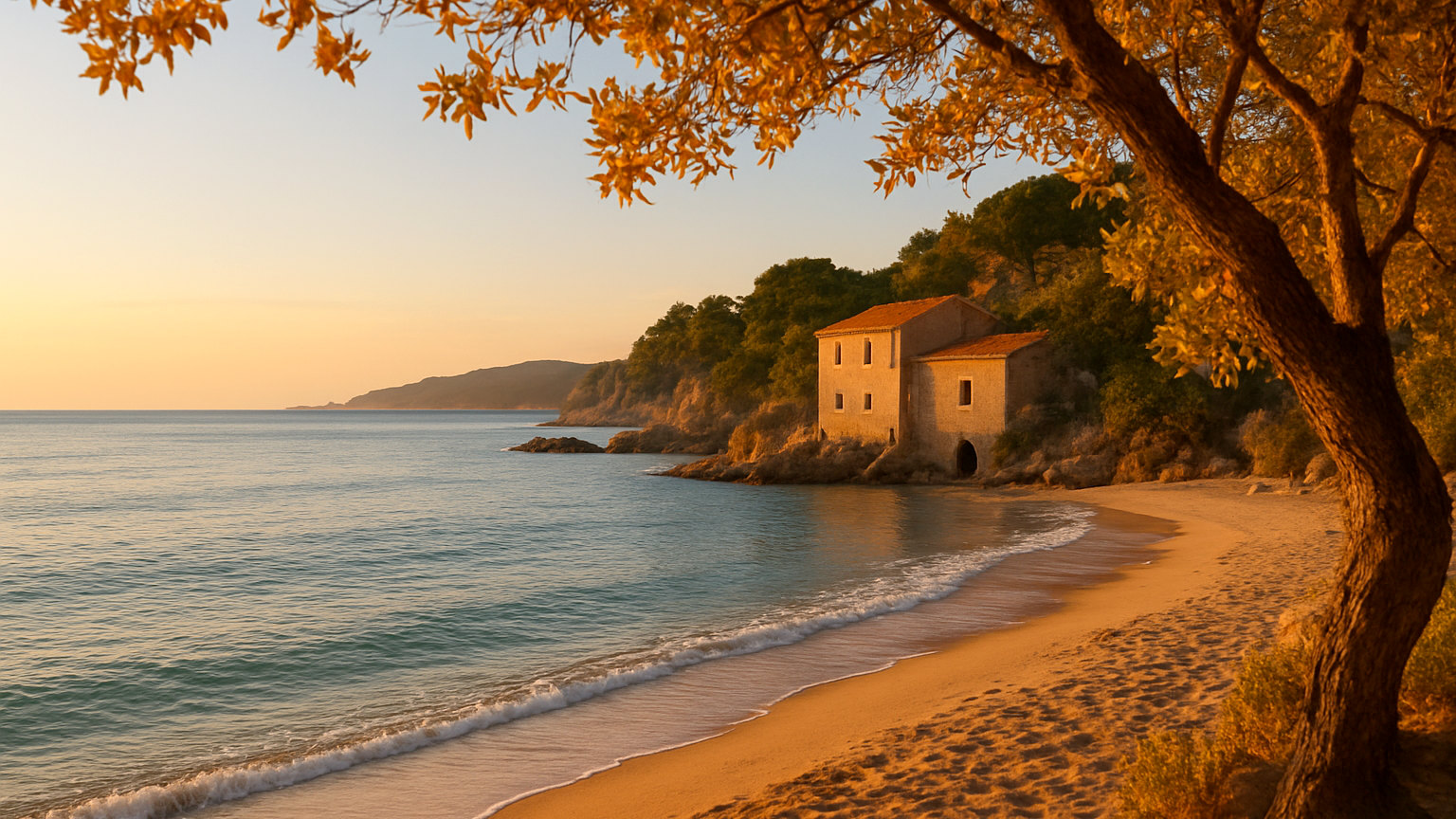
Considerably. A shallow enclosed bay can be two or three degrees warmer than open water a short distance away, which is a bigger difference than a fortnight of calendar. This is why the eastern Algarve is warmer than the west, and why lagoon beaches beat exposed ones early in the season.
Strong offshore winds can also drive warm surface water away and pull colder water up, which is noticeable in the Cyclades during the meltemi.
What is warm enough?
As a rough guide, most adults find twenty-two degrees and above comfortable, twenty to twenty-two acceptable after a minute, and below twenty a quick dip. Children generally need a degree or two more than adults. Anything below eighteen is bracing rather than pleasant.
Where can you check?
Several sites publish daily and monthly sea temperature figures by resort, drawn from buoys and satellite readings. They report open water rather than the specific bay you will swim in, so treat the published number as a floor and expect a sheltered beach to run warmer on a calm day.
What about the Black Sea and the Baltic?
The Black Sea warms quickly to around twenty-five degrees in August and cools fast, giving a usable window of roughly late June to mid-September. The Baltic rarely exceeds twenty and is genuinely cold for most of the year, which is why the Polish and Lithuanian beaches stay empty despite being excellent.
Is it changing?
Mediterranean sea temperatures have trended upward over recent decades and marine heatwaves have become more frequent, which lengthens the swimming season at both ends. Historical averages remain a reasonable guide and are increasingly likely to understate rather than overstate the figure.
If you are planning further, When Is the Best Time to Visit Rome? covers the next part of the decision, and there is more in our Seasons guides.
The short answer
The sea lags the air by about two months, peaks in September and is coldest in March. October beats June nearly everywhere. Check the figure for the specific resort and month rather than the country, and remember a sheltered bay runs warmer than the open sea.