The Alps sit in the middle of the best rail network in the world, which makes them unusually easy to reach without flying. Several resorts have a railway station in the village, and the journey avoids the two-to-three-hour transfer that follows most ski flights.
Which resorts have stations?
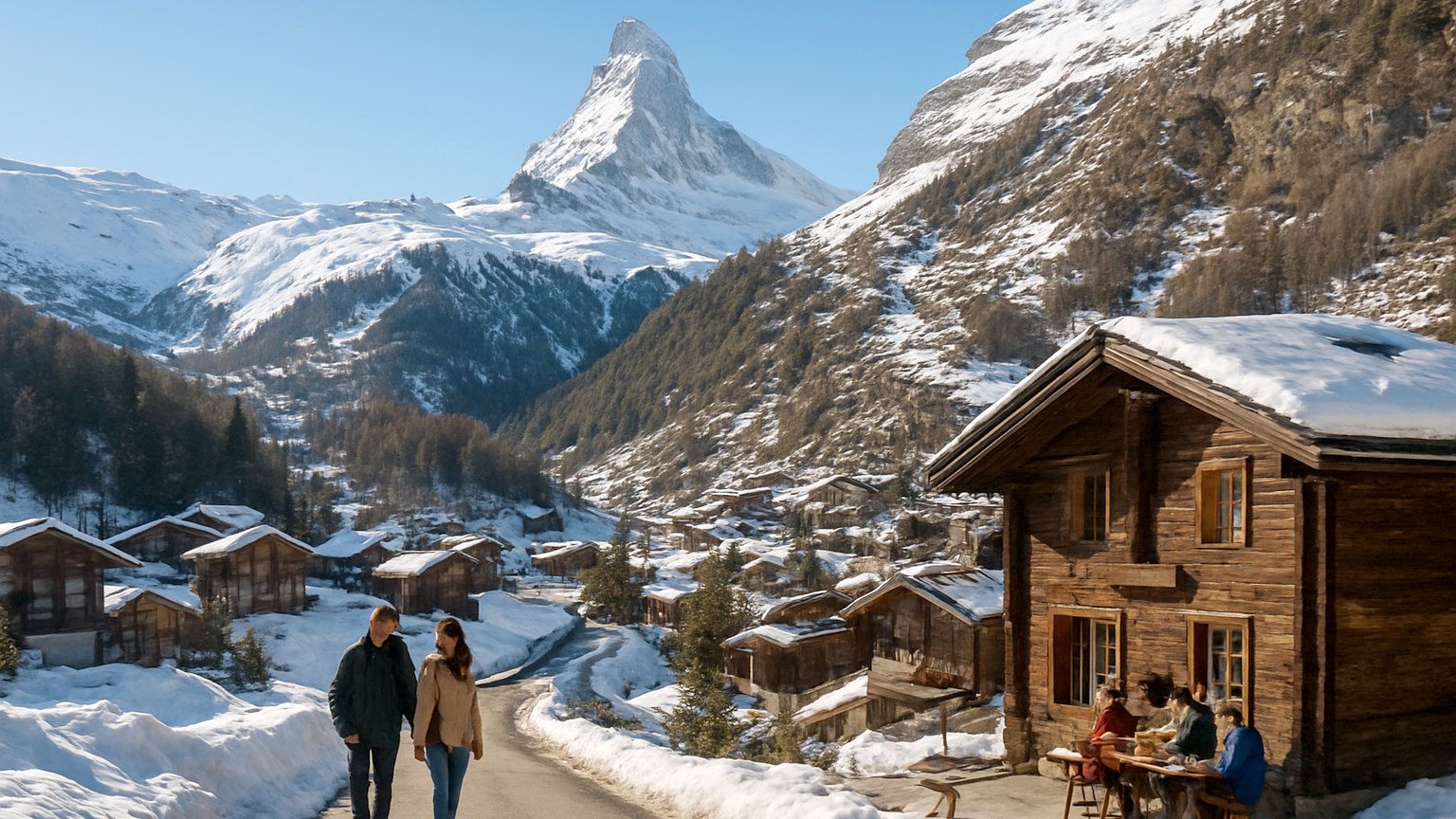
Zermatt, Wengen, Grindelwald, Murren and Andermatt in Switzerland, all reached by mountain railway. St Anton and Landeck in Austria. Bourg Saint Maurice, Moutiers and Saint Gervais in France, which serve the Tarentaise and Mont Blanc resorts with a short bus onward. Brig and Visp for the Valais.
What is the direct ski train?
Seasonal services run from Britain and northern Europe into the French Alps on winter Saturdays, including overnight options, arriving at Bourg Saint Maurice and Moutiers. They save a night of accommodation and deposit you close to the resorts, and they book out early.
Schedules change between seasons, so check what is running for the winter you are travelling.
How long does it take?
From London, roughly eight to ten hours to the French Alps with a change in Paris or Lille, and similar to the Swiss Valais via Paris or Brussels. Austria is longer, typically a full day or an overnight service. Comparable door to door with flying once transfers are counted, and considerably more comfortable.
What about luggage?
The clearest advantage. No baggage fees, no weight limits in practice and no ski carriage charges, which on airlines are substantial. Skis travel free on most European trains, and there is no risk of equipment arriving a day late.
How much does it cost?
Highly dependent on booking date. Advance fares released months ahead are cheap and rise steeply as trains fill. Booked late, rail is usually more expensive than a budget flight. Booked two or three months out, it is frequently cheaper once bags, transfers and ski carriage are added to the flight.
Is driving worth considering?
For a group or a family with equipment, frequently. The drive from Calais to the French Alps is around nine or ten hours, and to Austria longer. Winter tyres or chains are legally required in several alpine countries and regions during the season, and the rules differ by country.
Vignettes are needed for Austria, Switzerland and Slovenia, and motorway tolls apply in France and Italy.
What about the last leg?
Most station towns run frequent buses to the resorts above them, timed around train arrivals, and many are inexpensive or included with a lift pass. Swiss mountain railways run directly into the car-free villages.
What should you check?
Whether a reservation is compulsory, which it is on most high-speed services. Connection times, which matter with ski bags. Whether your ticket is tied to a specific train. And the onward bus timetable for a Sunday evening arrival.
Is the coach an option?
The cheapest way to reach the Alps and the slowest, with overnight services from Britain and northern Europe to the French and Austrian resorts. Journeys run to eighteen hours or more. It suits budget trips and is hard work either side of a week of skiing.
What about winter tyre rules?
Legally required in Austria and Germany in wintry conditions, and in Italy and France on designated mountain roads during the season, with chains as an alternative in some cases. Hire cars collected at alpine airports usually have them; cars driven from Britain frequently do not.
How do you book rail tickets?
Directly with the national operators where possible, since third-party sites add fees, and for cross-border journeys a single retailer covering several networks is sometimes simpler. Advance fares are released several months ahead, and for the ski train specifically, booking opens early and sells out.
What Is Off-Piste and How Dangerous Is It? is the natural next read, alongside the wider Seasons section.
The short answer
Take the train to Bourg Saint Maurice or Moutiers for France, Brig or Visp for the Valais, or St Anton for Austria, booking two to three months ahead. Skis travel free, the seasonal ski train saves a night, and driving needs winter tyres and vignettes.