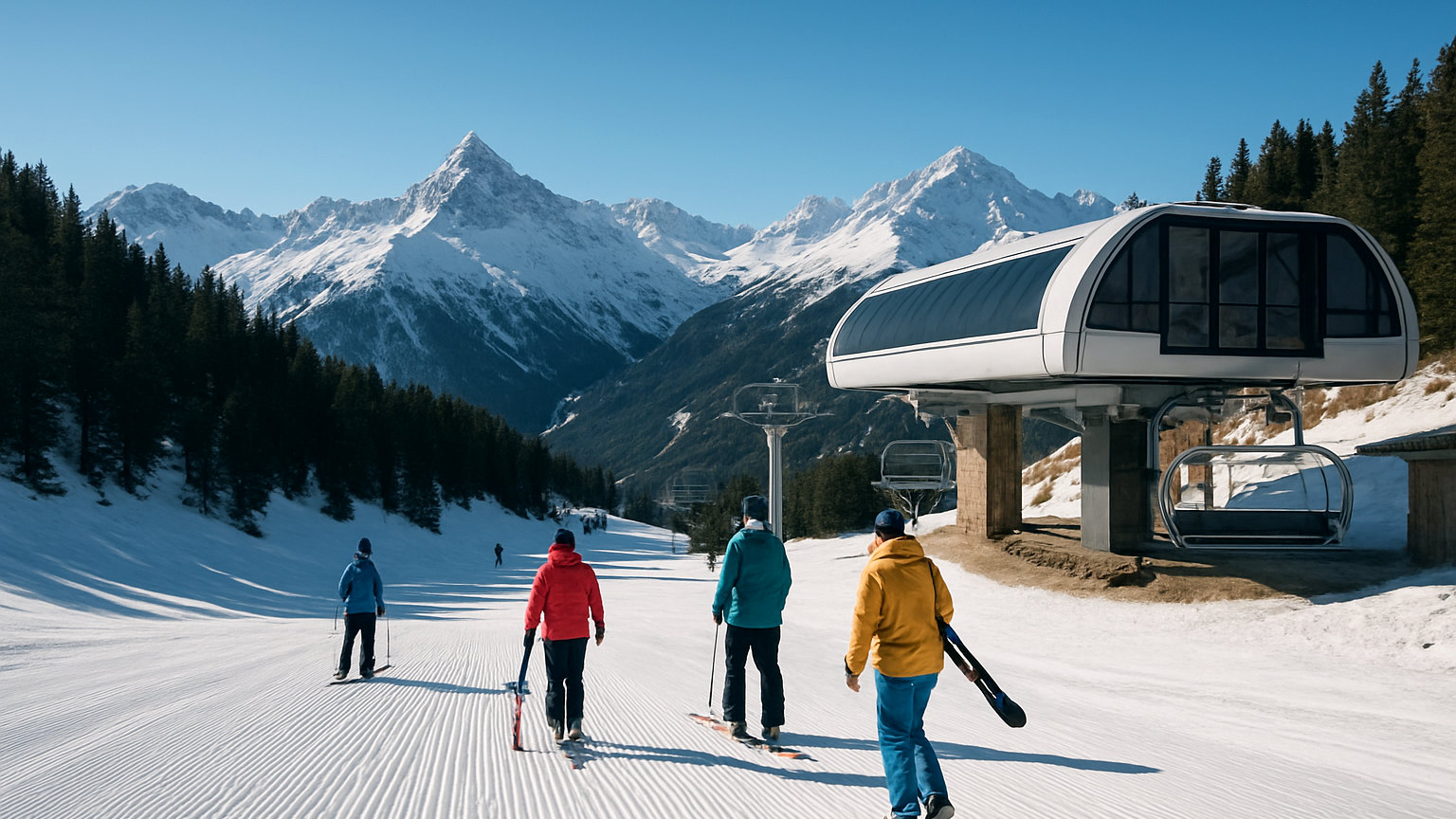
The European ski season nominally runs from December to April. In practice it varies by several weeks depending on altitude, and the published opening date of a resort tells you when some lifts run rather than when the whole area is skiable.
When does it start?
High-altitude resorts typically open in late November or early December, with full operations from mid-December. Lower resorts often wait until the Christmas period and sometimes later. Glacier areas such as Hintertux, Zermatt, Saas Fee and the Stubai run from autumn.
When does it end?
Mid-April for most Alpine resorts, with the high ones running into late April or early May. Lower resorts close in late March. Glacier skiing continues through spring and in a few cases year round.
Closing dates are usually published in advance and are sometimes brought forward in a poor season.
What is early season like?
Uncertain and cheap. Early December has the lowest prices of the season and the fewest people, with partial lift openings and thin cover common. It suits confident skiers happy to take the risk and is a poor choice for a first trip or a family.
What is late season like?
Sunny, cheap and softer. Late March and April bring long days, warm afternoons and terraces, with good snow at altitude and slush lower down. The morning skiing is often excellent and the afternoon heavy. Several resorts run closing weekends with events.
Which resorts have the longest seasons?
Val Thorens, Tignes and Val d Isere in France. Obergurgl and Ischgl in Austria. Zermatt and Saas Fee in Switzerland. Cervinia in Italy. All have substantial high terrain and several link to glaciers, which extends both ends.
What about summer skiing?
Limited and genuine. A handful of glacier areas operate in June and July, mainly for racing teams and camps, with a small number of runs open in the morning before the snow softens. It is a curiosity rather than a holiday for most people.
How do you check?
Resort websites publish opening and closing dates for each season, along with daily lift and piste counts once open. Checking the number of lifts running rather than the fact that the resort is open is the useful figure at the edges of the season.
Is the season changing?
Yes. Alpine snow cover has declined over recent decades, particularly below about fifteen hundred metres, and many lower resorts have shortened their seasons or shifted towards other winter activities. High-altitude skiing remains reliable and the altitude question matters more each year.
Which weeks are best?
Mid-January for the best combination of snow and price, February for the most reliable conditions at the highest prices, and mid-March for sunshine and value. The edges of the season are cheapest and least certain.
What about Easter?
The one spring price spike, and it moves by up to a month between years. An early Easter falls in good snow conditions and a late one can find lower resorts closing. Checking where Easter falls before booking a spring trip matters more for skiing than for most holidays.
Does the season differ outside the Alps?
Yes. The Pyrenees and Andorra run roughly December to April. Bulgaria and the Tatras are similar with more variability. Scandinavian resorts run later into spring, with long light evenings in March and April, and northern ones can ski into May.
Which end is better value?
Both are cheap and they fail differently. Early December risks thin cover and partial openings with everything fresh and quiet. Late March and April have a full mountain open and softening snow, with long sunny days. For most people the spring end is the better gamble.
If you are planning further, When Is the Best Time to Ski in Europe? covers the next part of the decision, and there is more in our Seasons guides.
The short answer
Most resorts run December to mid-April, with high-altitude and glacier areas opening earlier and closing later. Early December and late March are cheap and uncertain, mid-January is the best value with good snow, and altitude decides everything at the edges.