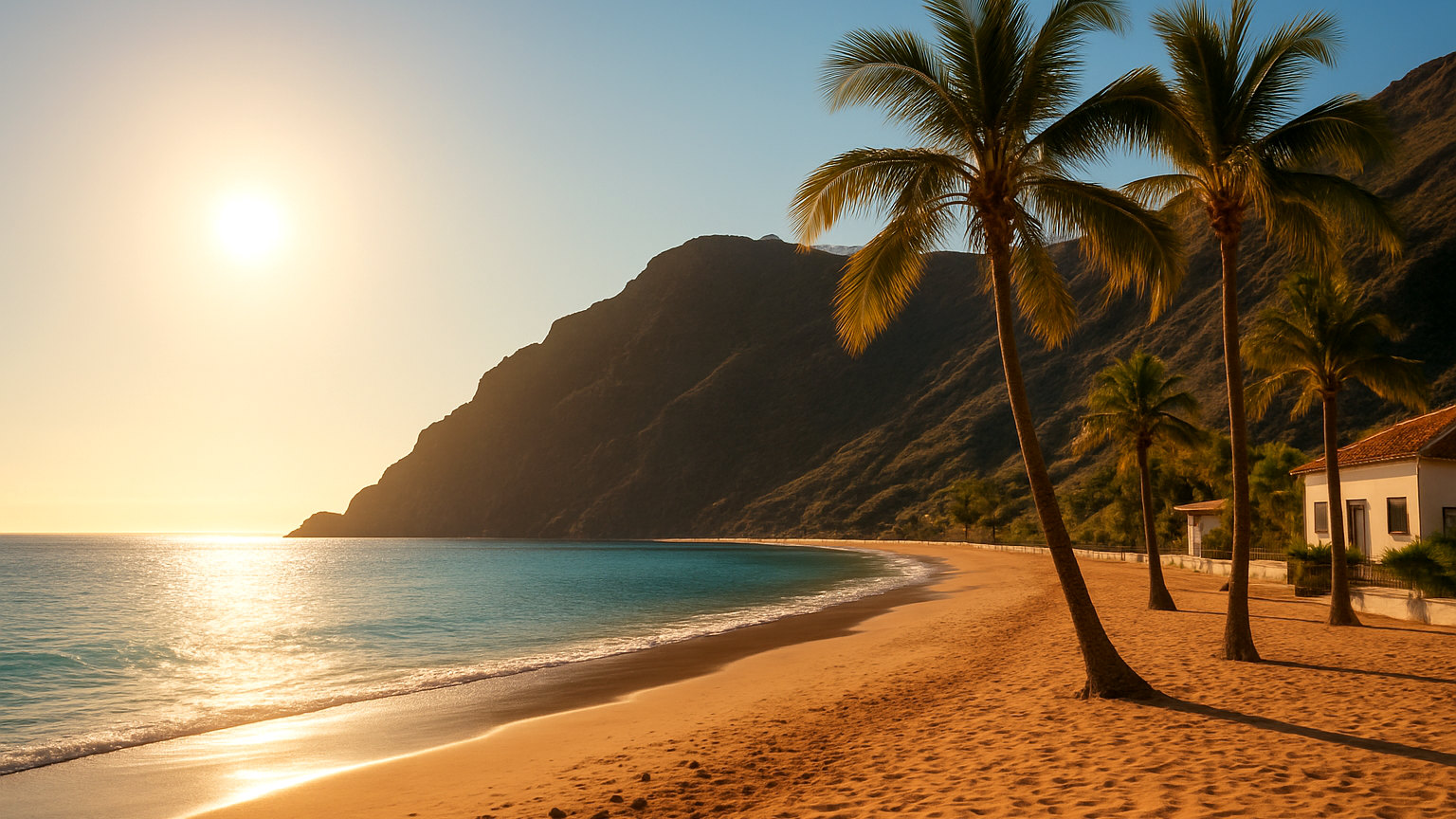
Winter sun runs on its own pricing calendar. The Canaries are in high season from November to March while mainland Europe is at its annual low, which means the usual advice about travelling off peak points in the wrong direction. Knowing where the peaks fall is most of the saving.
Where are the peaks?
Three of them. Christmas and New Year, which is the most expensive fortnight. February half term. And February more broadly, which is peak season for Scandinavian and German visitors as well as British ones.
Where are the cheap windows?
The first three weeks of December, before the festive rise, and the period from around the seventh of January to the start of February. Both have identical weather to the expensive weeks. Early November and late March are also outside the busiest periods.
Where does the money go?
Accommodation first and flights second, with the two often comparable on Canary routes in peak weeks. Transfers are short and cheap. Food and drink in the Canaries are inexpensive by western European standards, helped by the islands lower tax rates.
Which accommodation type is cheapest?
Self-catering apartments, by a wide margin, particularly for stays beyond a week. Apartment complexes in the southern Canaries are plentiful and the weekly rate falls steeply with duration. A month self-catering costs considerably less than a fortnight half board.
Is all inclusive worth it?
A weaker case than in Turkey or Egypt, since Canarian resorts sit near towns with cheap restaurants and the days are short enough that you are not drinking from ten in the morning. Half board or self-catering usually wins for couples, and all inclusive holds up better for families.
How do the mainland alternatives compare?
Considerably cheaper, because winter is their low season. Southern Spain, the Algarve, Malta and Cyprus all fall to a fraction of their summer rates, with car hire cheap and restaurants competing for a small market. The trade is five degrees and a higher chance of rain.
How far ahead should you book?
For Christmas and half term, many months, since capacity is genuinely constrained. For the cheap windows, a couple of months is usually enough, and late availability does appear in early December and mid-January when operators have surplus.
What are the hidden costs?
Compulsory gala dinner supplements over Christmas and New Year. Heated pool access at a small number of properties. Sunbed hire on some beaches. Airport parking at the UK end, which is at its most expensive over the festive period.
What is the cheapest realistic trip?
A self-catering apartment in the south of Gran Canaria or Tenerife for two or three weeks in mid-January, flying midweek from a regional airport, booked a few months ahead. That combination costs a fraction of the same holiday at half term.
How do the flights price?
Like summer Mediterranean fares, because winter is the peak on these routes. Midweek departures are cheaper than weekends, regional airports often undercut London because capacity is high, and booking early matters for the peak weeks rather than the quiet ones.
What can you cut without spoiling it?
Board basis, by self-catering breakfast and lunch. Length of stay at the expensive end by shifting the dates rather than shortening the trip. And the resort, since the difference between a front-line hotel and one five minutes back is substantial and the weather is identical.
How does it compare with a summer holiday?
A winter fortnight in the Canaries typically costs more than the same fortnight in mainland Spain in May or October, and less than August almost anywhere. Against that, the weather is the most reliable in Europe at that time of year, which is the product being bought.
Where Is the Warmest Place in Europe in Winter? answers a related question in more depth, and there is more of the same across our Seasons guides.
The short answer
Avoid Christmas, New Year and February half term, and travel in early December or mid-January for identical weather at far lower prices. Self-cater for anything beyond a week, fly midweek from a regional airport, and consider the Algarve or Malta if five degrees cooler is acceptable.