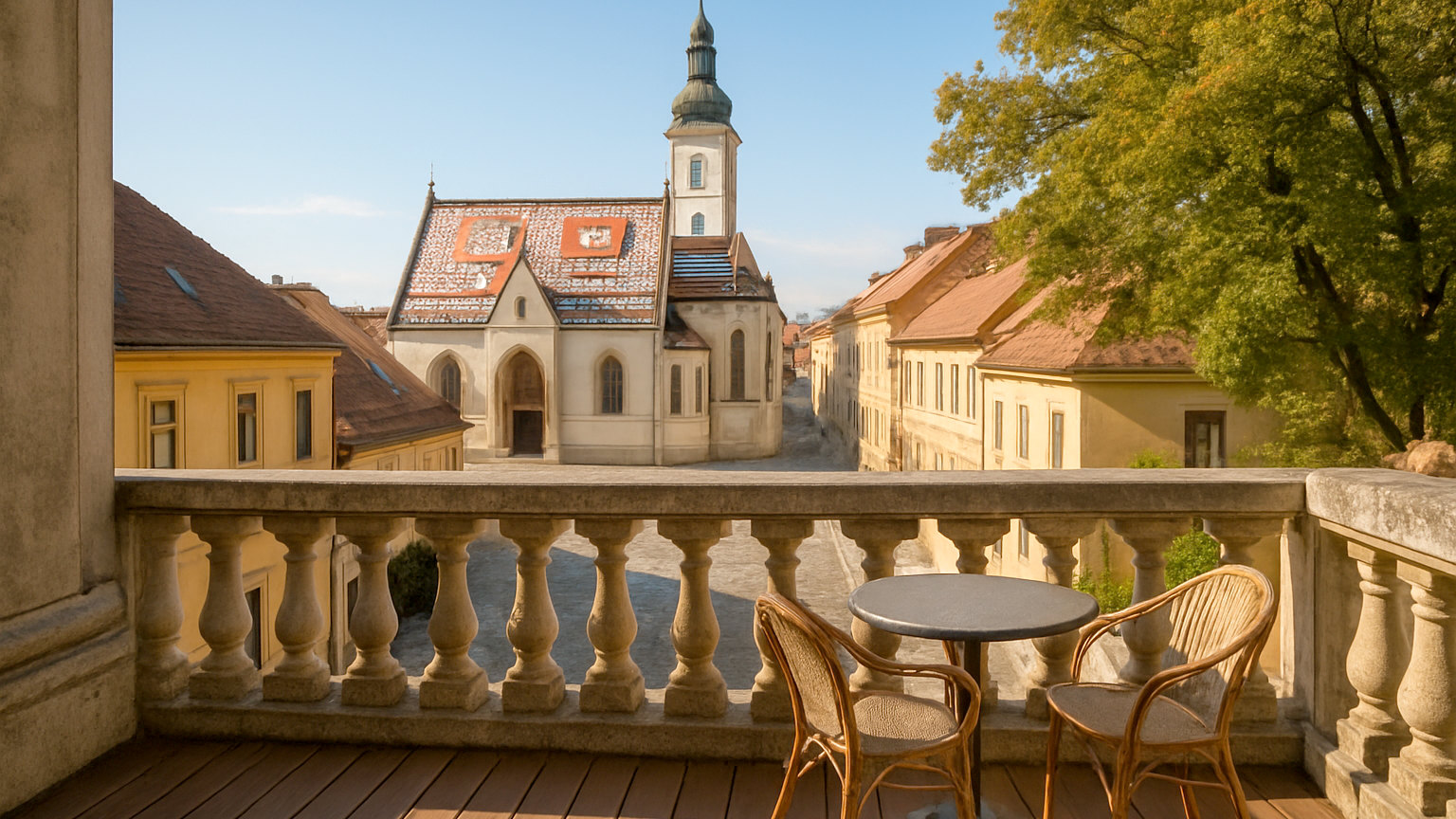
Zagreb divides into the Upper Town on the hill, which is the historic core, and the Lower Town below it, which is the nineteenth century city with the squares, parks and almost all of the hotels. The distinction decides where you stay.
What is the Upper Town?
Gornji Grad, the medieval quarter with St Mark church, the cathedral nearby, cobbled streets and the gas lamps still lit by hand each evening. It is the most atmospheric part and has very little accommodation, since the buildings are protected and small.
Where should you actually stay?
The Lower Town, around Ban Jelacic square and the green horseshoe of parks running down towards the station. This is the practical centre, holds the hotel stock and puts you five minutes from the funicular up to the Upper Town.
What is the green horseshoe?
A U-shaped sequence of parks and squares laid out in the nineteenth century between the main square and the railway station, lined with museums and institutional buildings. Staying along it is pleasant and central.
What about near the station?
Convenient for onward travel to the coast or to Ljubljana and Budapest, and perfectly central, since the station sits at the foot of the horseshoe a ten-minute walk from the main square.
Which areas are more local?
Britanski trg, with its Sunday antiques market, and the streets around it to the west. Quieter, residential, good cafes and a short walk or tram ride from the centre.
How expensive is it?
Moderate by European standards and considerably cheaper than the Croatian coast, which is priced for summer tourism. Zagreb rates are steady year round with a rise for the Advent market period.
What about the Advent market?
Zagreb runs a large and well-regarded Christmas market through December across the squares and parks, which fills the city and raises accommodation prices. Book well ahead if that is when you are going.
How do you reach the airport?
A shuttle bus to the main bus station in around half an hour, with taxis and ride-hailing also inexpensive. The airport is south-east of the city.
How long do you need?
Two nights. Zagreb is frequently a stop on the way to Plitvice or the coast, and it holds its own for a couple of days without sustaining much longer.
Is it walkable?
Entirely. The centre is flat apart from the climb to the Upper Town, and the funicular, which claims to be among the shortest in the world, handles that for a nominal fare.
Are apartments common?
Widely available in the Lower Town and good value for a family or a longer stay. Many are in nineteenth century blocks with high ceilings and no lift, which is worth checking before booking an upper floor.
Is parking a problem?
In the centre, yes, with limited street space and zoned charging. A hotel with its own parking is worth prioritising if you are driving on to the coast or Plitvice.
What about the tram network?
Extensive, cheap and useful for reaching the districts beyond the centre, with tickets bought at kiosks and validated on board. For most visitors staying in the Lower Town it is not needed, and it makes staying slightly further out entirely workable.
How does it work as a base?
Reasonably. Plitvice lakes are two hours south, Trakoscan castle and the Zagorje hills an hour north, and the Slovenian border forty minutes away. Most visitors move on rather than day tripping, since the coast is four hours further.
Is it good for a family?
Reasonably. The Lower Town parks, the funicular and the technical museum work well, and the city is compact and safe. Zagreb is an easy stop rather than a destination with children, and the coast is the reason most families are in Croatia.
Which Side of Nicosia Should You Stay On? answers a related question in more depth, and there is more of the same across our Hotels guides.
The short answer
Stay in the Lower Town around Ban Jelacic square or along the green horseshoe towards the station, which holds nearly all the accommodation and is five minutes from the funicular. The Upper Town is for walking, not sleeping, and December fills the city for the Advent market.