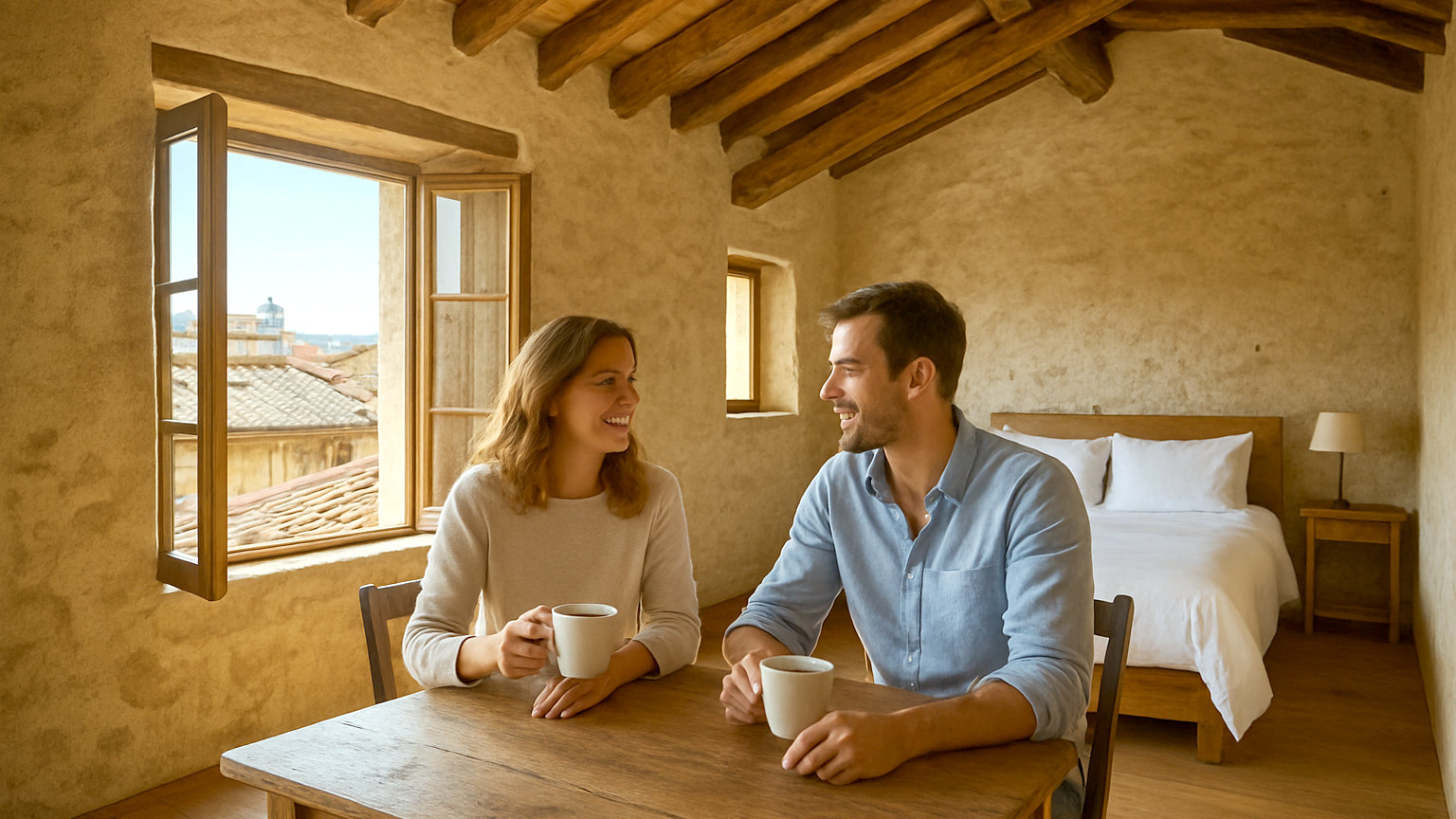
Boutique hotels suit couples more naturally than any other group, because everything they do well is what two people want and everything they lack is what families need. The features worth paying for are narrower than the marketing suggests.
What should you prioritise?
Quiet, which is the commonest cause of a disappointing stay and the thing old buildings handle worst. Then somewhere to sit that is not the bed, whether a terrace, a balcony or a window seat. Then breakfast, which small hotels frequently do very well.
Room size comes a long way down that list.
Is a terrace worth paying for?
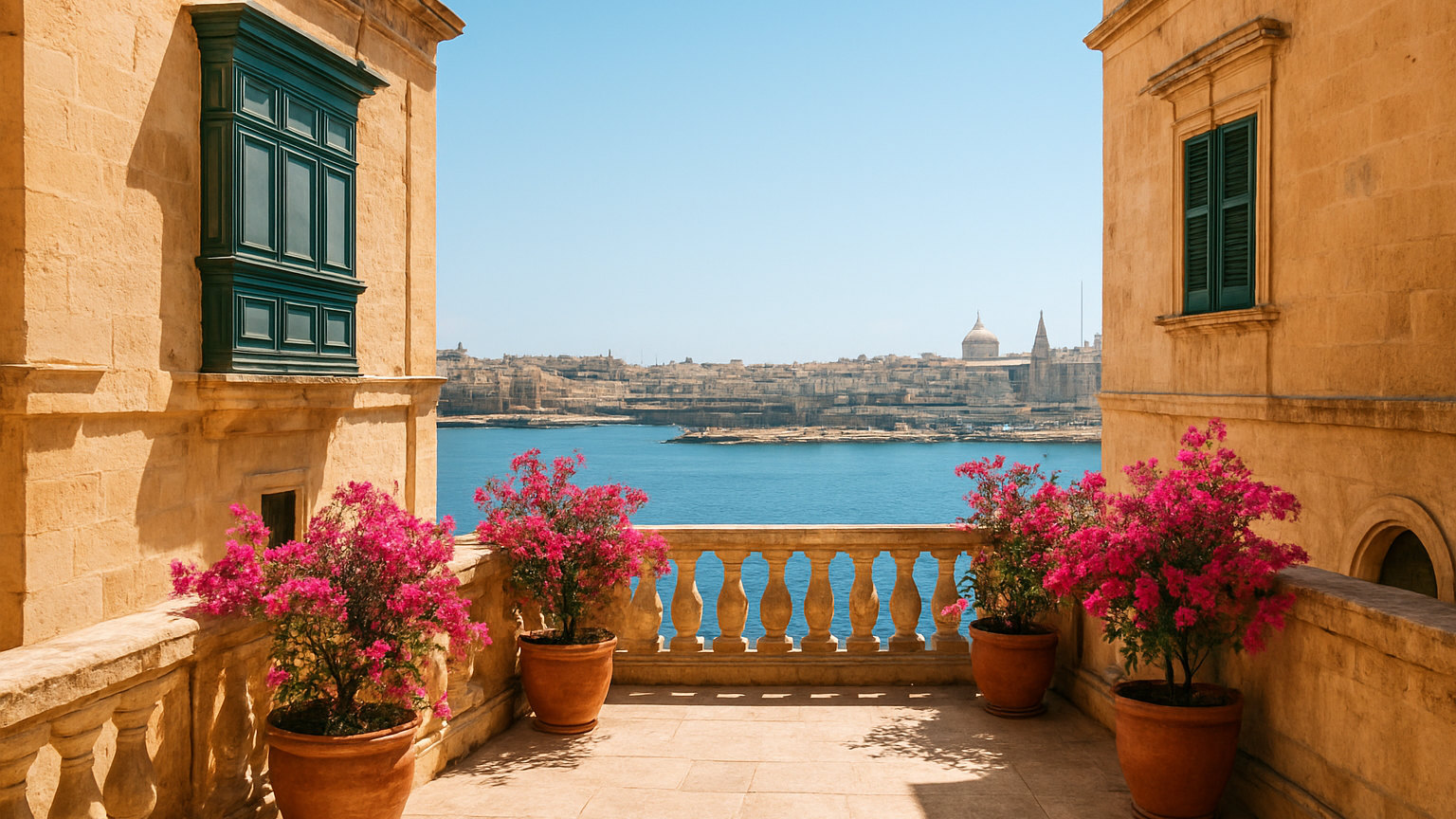
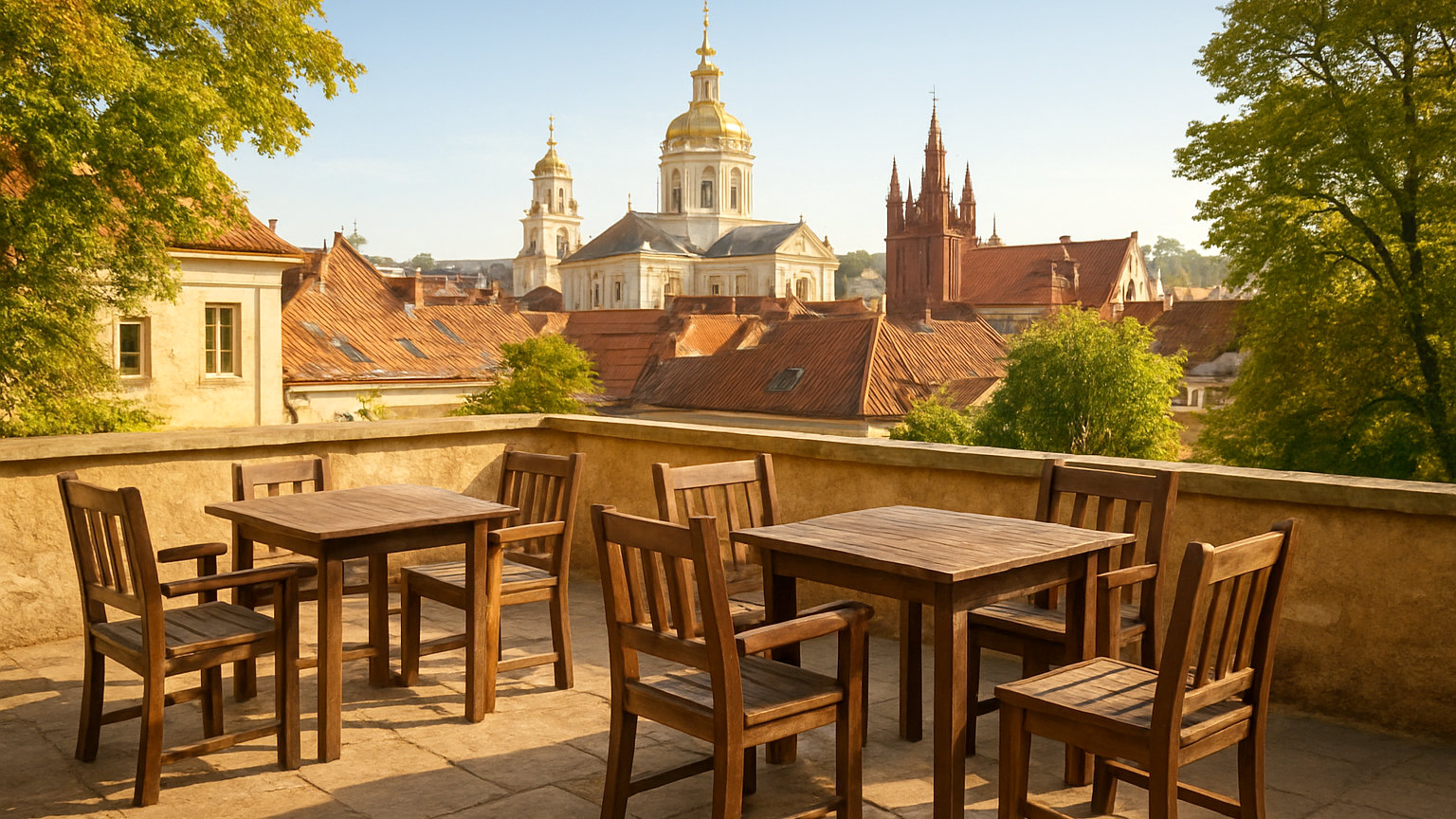
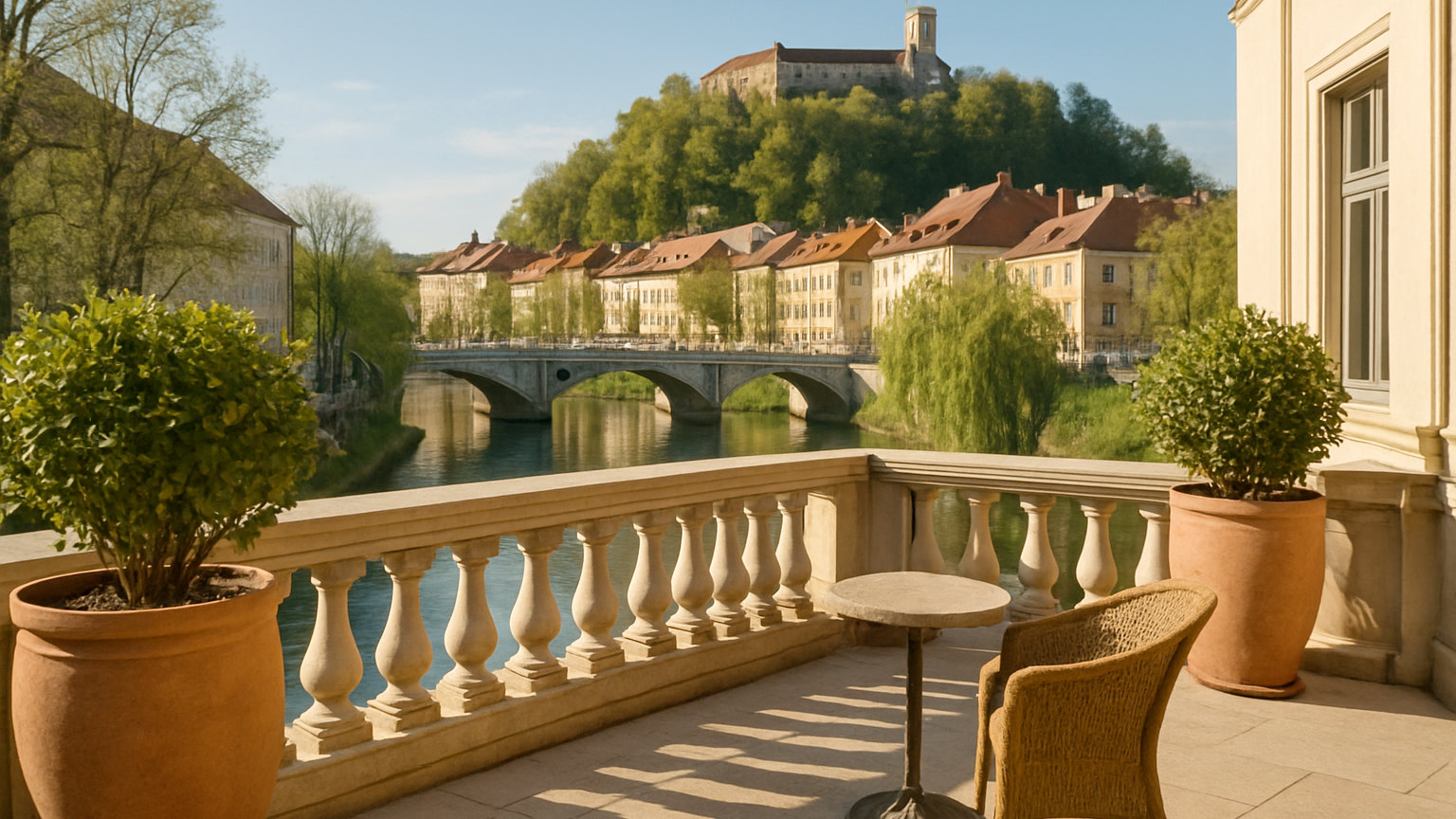
The single best upgrade available to a couple in a warm climate, and better value than a larger room or a view from a window. A private terrace adds hours of usable space, and a shared roof terrace achieves much of the same.
Which cities are best?
Athens, for the concentration of small hotels with Acropolis rooftops. Lisbon and Porto for the depth of the scene and the prices. Seville and Granada for courtyard houses. Venice out of season for palazzo conversions at half the summer rate.
What about the countryside?
Frequently better than cities for couples. Masserie in Puglia, agriturismi in Tuscany, quintas in the Douro and converted farmhouses across Spain and France all offer small properties with pools, gardens and serious food, at prices well below city equivalents.
They require a car, which is the main constraint.
Should you mention an occasion?
Always, and at the time of booking rather than on arrival. Small hotels respond to this better than any other kind of property, because the owner sees the booking and can act. A line in the reservation notes frequently produces an upgrade, a bottle or a table held.
How do you get a quiet room?
Email and ask which room is quietest, describing that as your priority. In a small hotel this is a question the owner can answer precisely, which is not true at a chain. Courtyard-facing rooms in old buildings are usually the answer.
Do they do breakfast well?
Frequently, and it is a real differentiator. A kitchen cooking for twenty can make something proper rather than running a buffet, and in Portugal, Italy and Greece the breakfast at a good small hotel is often the best meal of the day.
Is adults only worth seeking?
Less necessary than at resorts, since small hotels are rarely chosen by families anyway. The exception is high summer in family destinations, where an adults-only policy guarantees what a small hotel usually delivers by default.
How long should you stay?
Three nights or more, since the atmosphere and the service are what you are paying for and both need time to be felt. On a one-night stop the premium is largely wasted.
When should you go?
Out of season, where possible. Small hotels discount more steeply than chains because they cannot fill on volume, and a palazzo in Venice or a townhouse in Lisbon in November costs a fraction of the May rate.
What about dinner?
Most small hotels have no restaurant, which in a city is an advantage since you will eat out anyway. In the countryside it matters, and a rural property with a good kitchen becomes a reason to stay rather than an amenity. Check before booking somewhere isolated.
Are they good for a first trip together?
Very, since the scale removes most of the logistics and the staff will point you at restaurants and neighbourhoods. A small hotel with an owner who knows the city is worth more on a first visit than any facility.
If you are planning further, Do Boutique Hotels Work for Families? covers the next part of the decision, and there is more in our Hotels guides.
The short answer
Prioritise quiet, a terrace and breakfast over room size. Email to ask which room is quietest, mention any occasion at booking, and consider a rural masseria or quinta over a city hotel. Stay three nights or more and travel out of season for the biggest discounts.