Small hotels are designed around two adults, and most of the things that make them appealing are the things that make them awkward with children. That said, a specific category of small property works extremely well with families, and it is worth knowing which.
What is the core problem?
Room capacity. Most rooms in a converted townhouse are certified for two, and there is no family inventory to fall back on. A hotel with twelve rooms may have none that take four people, and no amount of asking changes a fire certificate.
What else works against them?
Frequently no lift, which matters with a pushchair. Limited facilities, so nothing to occupy children. Breakfast at a fixed time in a small room. And a general atmosphere that other guests chose for its quiet.
Which small properties do work?
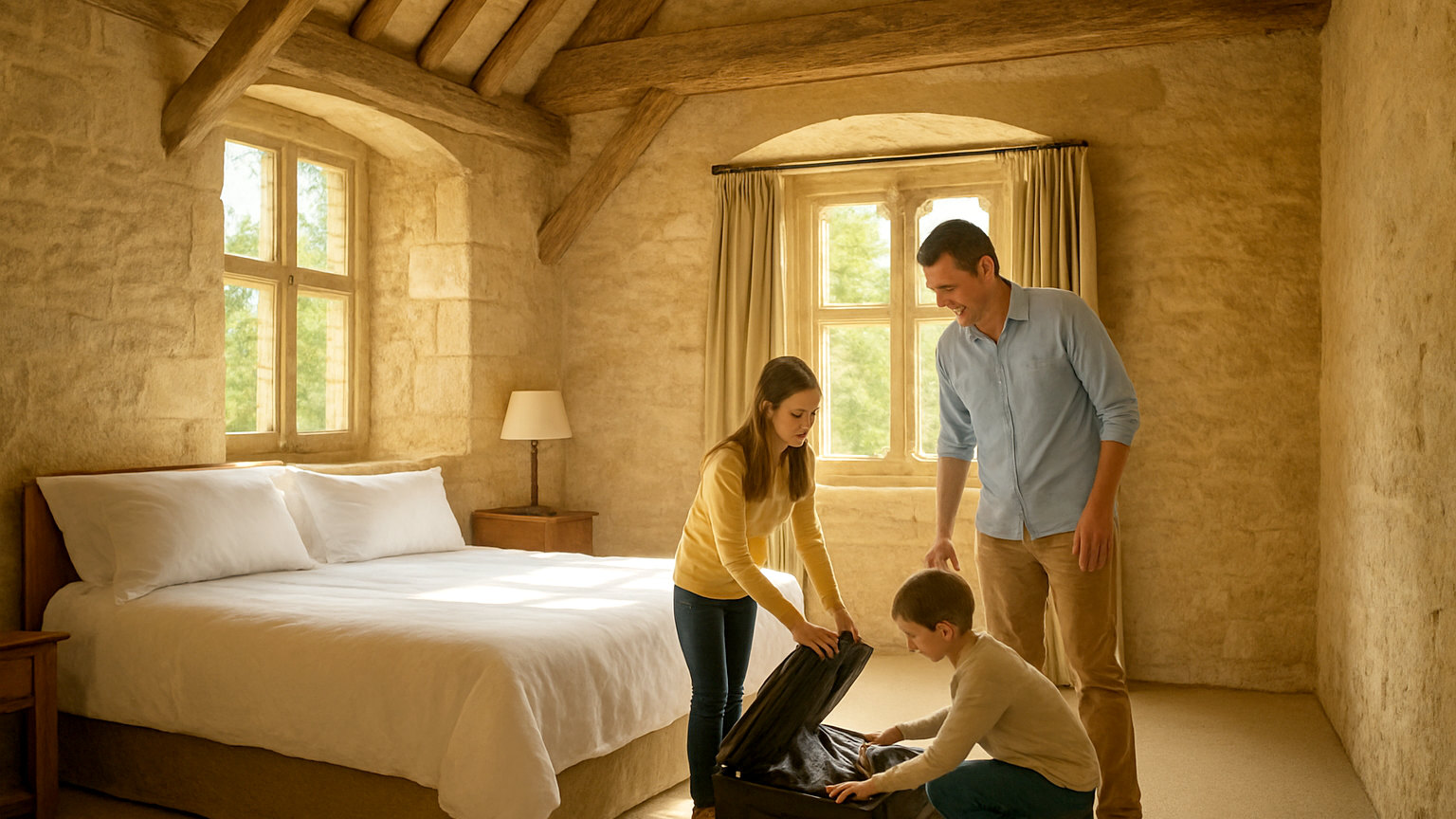
Rural ones. Italian agriturismi and masserie, Spanish cortijos and casas rurales, Portuguese quintas and French gites converted into small hotels are frequently excellent with children, because they have grounds, a pool, space and a family running them.
These are small and independent and they suit families better than most resort hotels.
What about southern European guesthouses?
The other exception. Triple and quadruple rooms are standard in Greek, Italian, Spanish and Portuguese pensions in a way they are not in western chains, and families are entirely normal there. These rarely market themselves as boutique and frequently deliver what the word promises.
What should you check?
The certified occupancy of the specific room, whether there is a lift, whether a cot is available, and whether breakfast has a flexible window. Also whether the hotel says anything about children at all, since some set a minimum age.
Are there minimum age policies?
At a minority of small properties, commonly twelve or sixteen, usually stated in the terms and occasionally buried. Worth checking before booking rather than discovering at arrival, particularly at adults-oriented rural retreats.
Does it work with older children?
Considerably better. From about ten a child can have their own room, sit through a breakfast and manage stairs, at which point most of the objections disappear. Two standard rooms at a small hotel is a perfectly good arrangement for a family with teenagers.
What about apartments?
The obvious alternative and frequently the right answer. A characterful apartment in an old building gives the same sense of place with the space and the kitchen a family needs, and several small hotels run apartments alongside their rooms.
How do you ask?
Directly, by email, describing the ages and asking whether they would recommend the property. Small hotels answer this honestly, and one that says it would not suit you is doing you a favour rather than losing a booking.
Is it worth the effort?
In the countryside, yes, where a small family-run property with a pool and a garden is one of the best family holidays available in Europe. In cities, usually not, where an apartment or an aparthotel does the job with less friction.
What about breakfast with children?
Worth asking about, since a small hotel serving breakfast in one room at a fixed hour is a different experience from a buffet. Many are happy to accommodate an early start or something plain for a child, and it is the sort of request they can actually act on.
Are other guests a problem?
Less than people fear and worth thinking about. In a twelve-room hotel everyone shares one breakfast room and one terrace, so a boisterous toddler is more noticeable than in a large property. Most owners are relaxed about it and will say so if asked.
Is it worth asking for a discount?
Not on the rate, and worth asking whether a child can share at no charge where the room allows it. Small hotels set their own policies and frequently have none written down, which means the answer depends on asking rather than searching.
If you are planning further, What Should You Expect From Service at a Small Hotel? covers the next part of the decision, and there is more in our Hotels guides.
The short answer
Most city boutique hotels are built for two and have no family rooms, no lift and few facilities. Rural conversions and southern European guesthouses are the exception and work extremely well. Check the certified occupancy and any minimum age, and take an apartment in cities.