Aparthotels sit between a hotel and a rented apartment: a reception, daily or periodic cleaning and hotel-style booking, combined with a kitchenette and usually a living area. For certain trips they are the best value accommodation in Europe and for others they are simply a hotel room with a fridge.
What do you actually get?
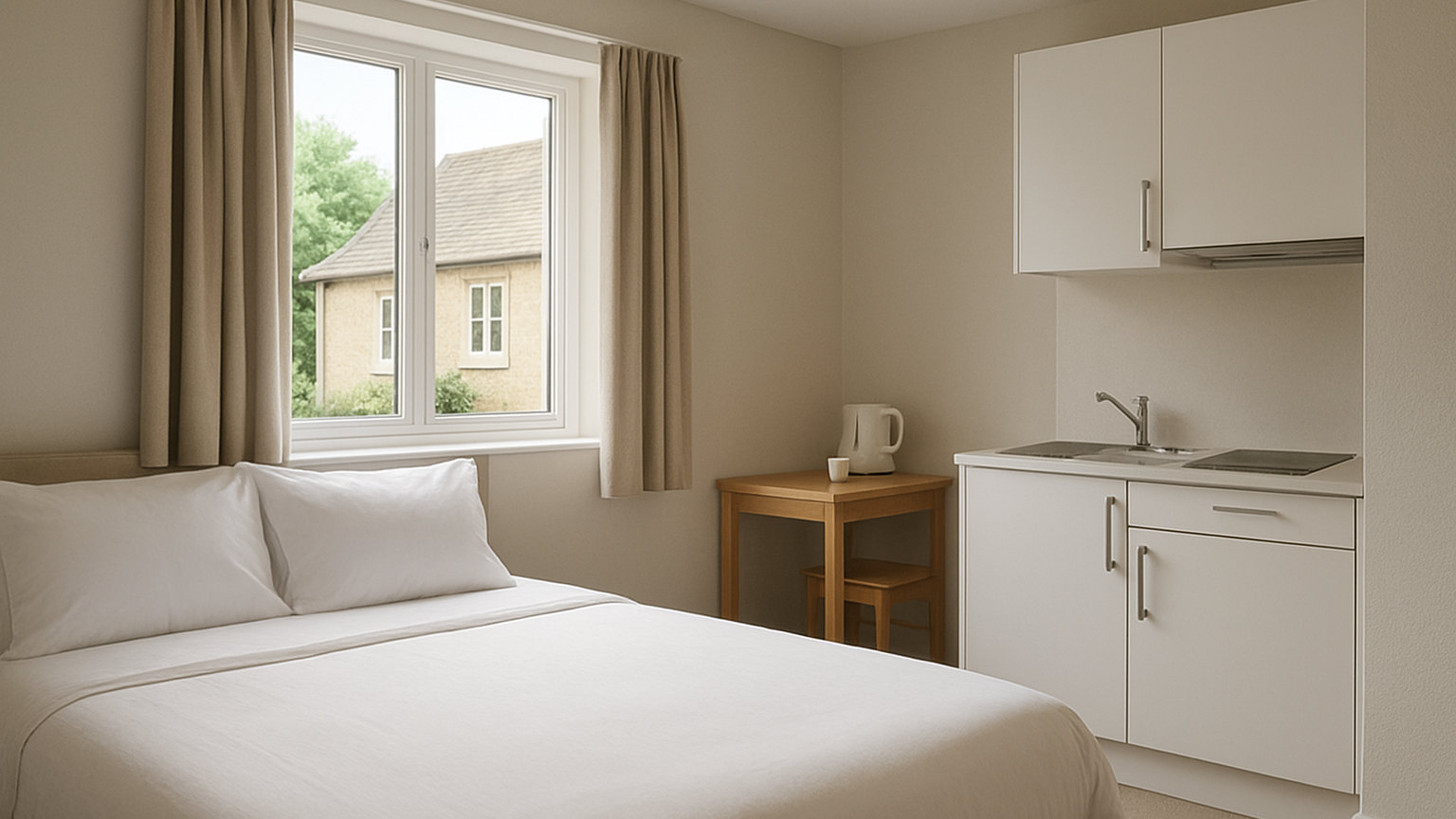
Typically a studio or one-bedroom unit with a hob, a microwave, a fridge and basic crockery, a small dining table and a sofa. Larger units have a separate bedroom. Cleaning is usually weekly rather than daily, and there is a reception rather than a lockbox.
When are they better value?
From about three nights, and decisively from a week. The kitchen removes breakfast and one other meal a day, which over a week is a substantial sum, and the living area makes the evenings usable in a way a hotel room is not.
For one or two nights the advantage is small, since you will not cook and the extra space matters less.
Who do they suit?
Families, who get a separate sleeping area and a kitchen for fussy eaters and early dinners. Anyone staying a week or more. Groups, since the price is per unit rather than per person. Anyone working remotely, since a desk and a proper table are standard rather than optional.
How do they compare with a rented apartment?
More reliable and usually more expensive per night. An aparthotel has a reception, a known standard, no cleaning fee and someone to call. A private rental is frequently cheaper and more characterful, with a large cleaning fee that penalises short stays and nobody available if something breaks.
What is the cleaning arrangement?
Usually once or twice a week rather than daily, with linen and towels changed at the same time. Some charge for additional cleaning. This is worth checking on a longer stay, since expectations differ between brands.
Is the kitchen usable?
Varies enormously. A proper hob, an oven and decent pans make real cooking possible; a microwave and a kettle do not. Photographs and reviews tell you which you are getting, and it is worth checking if you intend to cook rather than just make breakfast.
Where are they common?
Spain, Portugal and the Canaries, where apartment complexes are the dominant resort accommodation. The UK and Germany for city aparthotels aimed at business travellers. Increasingly everywhere, since the model suits both operators and guests.
What are the drawbacks?
Limited service, no restaurant, and sometimes reception hours rather than a twenty-four hour desk. Rooms are often in converted office buildings in business districts rather than in the old town. And they are less atmospheric than a small hotel.
What should you check?
What the kitchen actually contains, the cleaning frequency, whether there is a washing machine, the reception hours, and the location, since aparthotels are frequently slightly out of the centre. And whether the price includes everything, since some charge for final cleaning.
Are they good for one night?
No better than a hotel and sometimes worse, given the location and the limited service. Use a hotel for short stays and an aparthotel for long ones.
What about weekly rates?
Frequently discounted and rarely advertised. Aparthotels are built around longer stays and many quote a lower weekly or monthly figure than seven or thirty nightly rates. Asking directly for a rate on a stay of a week or more is worth doing.
Is there a laundry?
Often, and it is a genuine advantage on a longer trip. A washing machine in the unit or a laundry room in the building halves the packing for a two-week stay, which is worth more than most people credit until they have used it.
How Do You Read Hotel Reviews Properly? is the natural next read, alongside the wider Hotels section.
The short answer
Better value from three nights and clearly better from a week, particularly for families and groups, since the kitchen removes two meals a day and the price is per unit. Check what the kitchen contains and how often it is cleaned, and use a hotel for one or two nights.